How to choose affordable wall art that looks high-end in India
By Lurevi · June 2026 · 7 min read
Most people assume that wall art worth displaying has to be expensive. Walk into any well-styled Indian home — the kind that looks like it belongs in a magazine — and you'd think the artwork cost lakhs. It usually didn't.
The secret isn't the price of the art. It's the choices made around it: the size, the framing, the placement, and where the print itself came from. Get those right, and a ₹500 digital art print can look like it belongs in a premium gallery. Get them wrong, and even an expensive piece can look cheap.
This guide covers exactly how to choose affordable wall art options that still look high-end in Indian homes — room by room, wall by wall.
Why most affordable wall art looks cheap (and how to avoid it)
Before getting to what to buy, it helps to understand what gives wall art away as budget. There are four culprits:
- Wrong size. Small art on a large wall is the single most common mistake. A 5x7 inch print on a 10-foot wall looks like a postage stamp. Size commands presence — and going bigger costs almost nothing extra with digital prints.
- Thin, shiny frames. Cheap plastic frames with a glossy finish immediately signal budget. A matte finish, even on an inexpensive frame, reads as intentional.
- Low print resolution. Pixelated edges, washed-out colours, and blurry detail are giveaways. A high-resolution digital art print — 300 DPI minimum — holds sharp detail even at A1 size.
- Cluttered placement. Too many small pieces fighting for attention make a wall look busy rather than curated. Fewer, larger pieces with breathing room look more considered.
None of these are about money. They're about choices. And the good news: all four are completely fixable on a tight budget.
Size guide for Indian homes
Indian living rooms, bedrooms, and hallways have specific proportions that affect what size works. Here's a practical breakdown:
| Room / Wall | Recommended size | Notes |
|---|---|---|
| Living room main wall (8–12 ft wide) | A1 (24×33 in) or larger | Single statement piece or a triptych |
| Bedroom above bed (queen/king) | A2 (16×24 in) or 3× A3 side by side | Should be roughly 2/3 the width of the headboard |
| Home office / study | A3 (12×17 in) single or pair | Eye level when seated, not standing |
| Hallway / entryway | A3 portrait or A2 portrait | Vertical prints suit narrow walls |
| Kids room | A4 to A3 | Hang lower — at child's eye level |
A useful rule: the art should occupy roughly 60–75% of the wall width it's on. If in doubt, go one size larger than you think you need.
Framing on a budget: the mat board trick
The single most impactful upgrade you can make to affordable wall art costs almost nothing: add a white mat board between the print and the frame.
A mat board — the thick white card border you see in gallery frames — creates visual breathing room around the image. It signals that the work inside is worth the space. A ₹200 frame with a proper mat looks significantly more expensive than a ₹2,000 frame without one.
For most Indian living spaces, the best combination is:
- Thin black aluminium or natural wood frame
- White or off-white mat board, 2–3 inches wide
- Matte (not glossy) glass or acrylic
You can get frames made to custom sizes at any local framing shop in major Indian cities for ₹500–₹1,500 depending on size and material. Ask for an "international-style" frame — they'll know what you mean.
Which art styles consistently look premium in Indian interiors
Not all art styles translate equally well to Indian homes. These five consistently read as high-end regardless of what you pay for them:
1. Abstract digital art
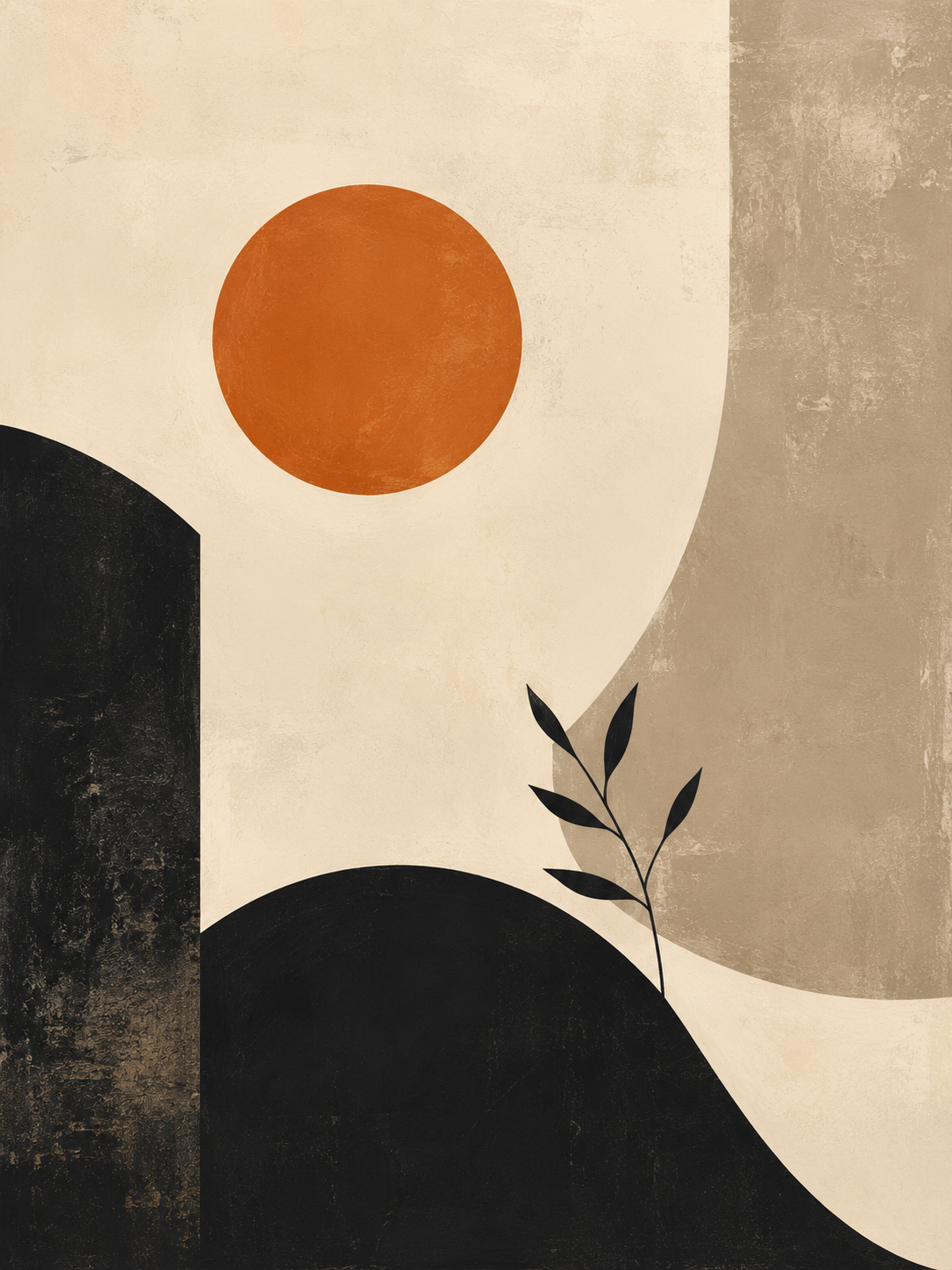
Bold compositions with a limited colour palette — two or three tones — look sophisticated against both white and warm-toned Indian walls. They're also the safest choice if you're unsure about matching art to existing furniture.
2. Botanical and nature prints
Large-scale botanical illustrations — oversized leaves, tropical plants, detailed flora — have a timeless quality that works in living rooms, bedrooms, and bathrooms. In India, they complement both modern and traditional interior styles.
3. Minimalist line art
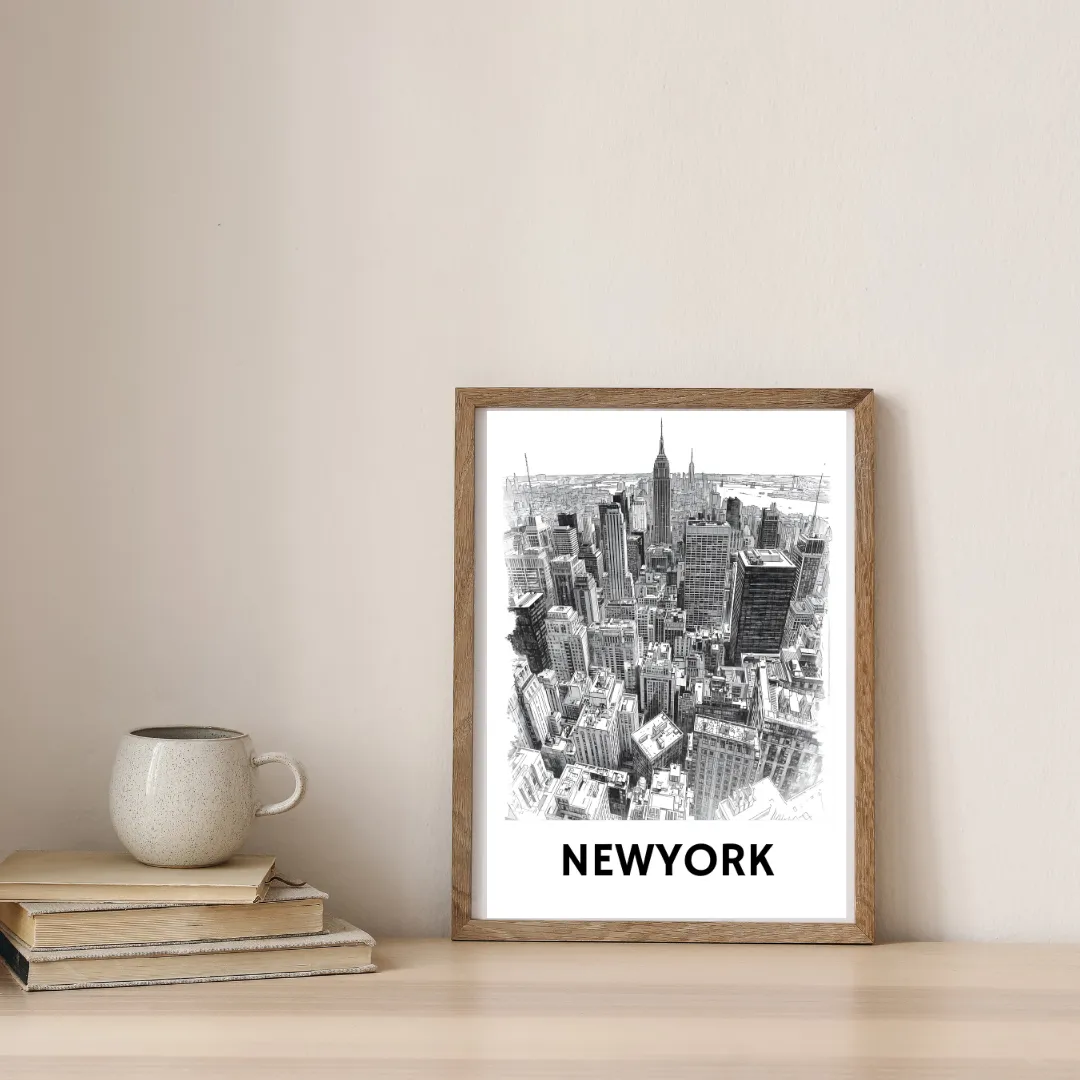
Single-line portraits, architectural sketches, and geometric compositions printed large on white paper look striking in home offices and modern apartments. They're particularly effective when the background of the print is pure white — it blends with the mat board and frame seamlessly.
4. City and landscape art
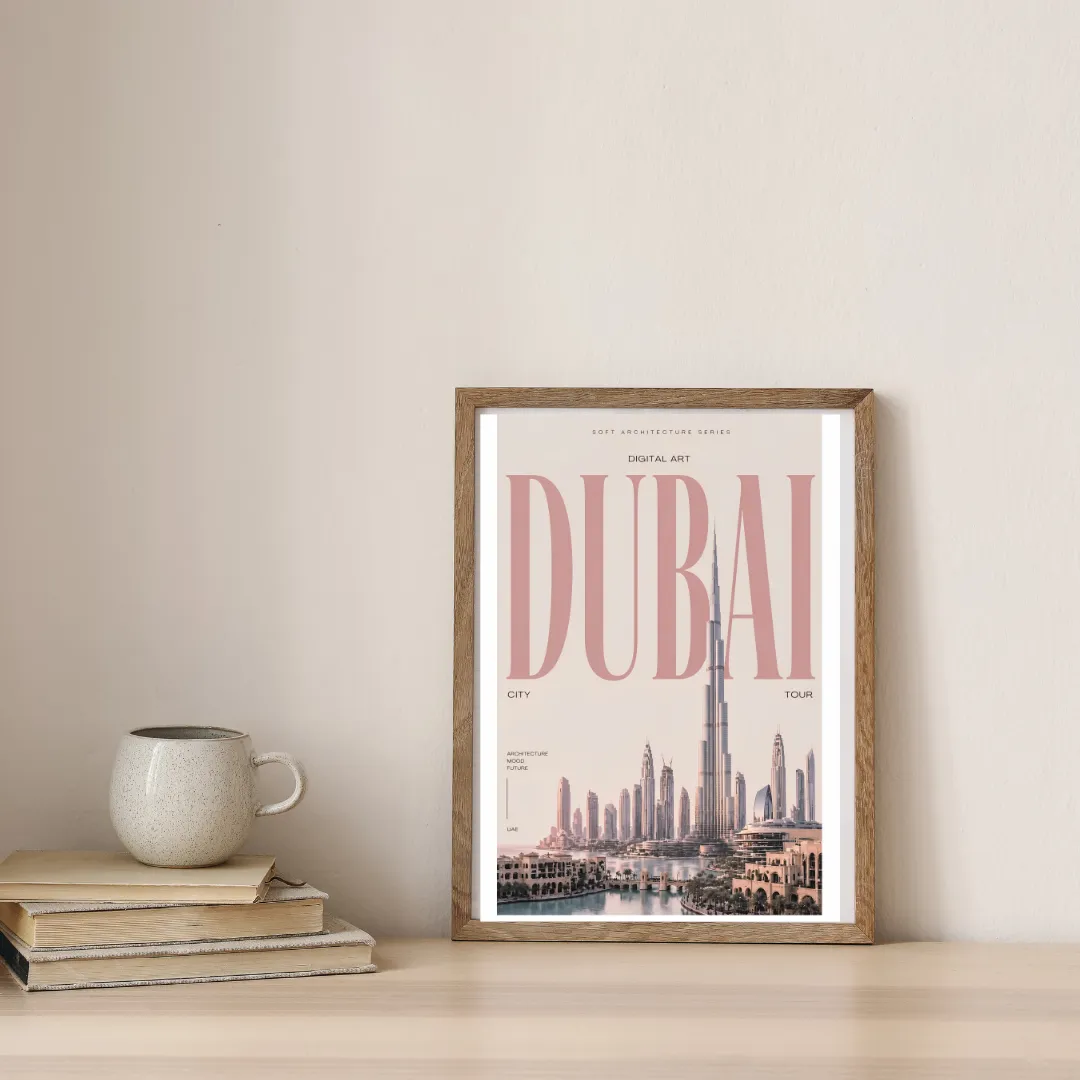
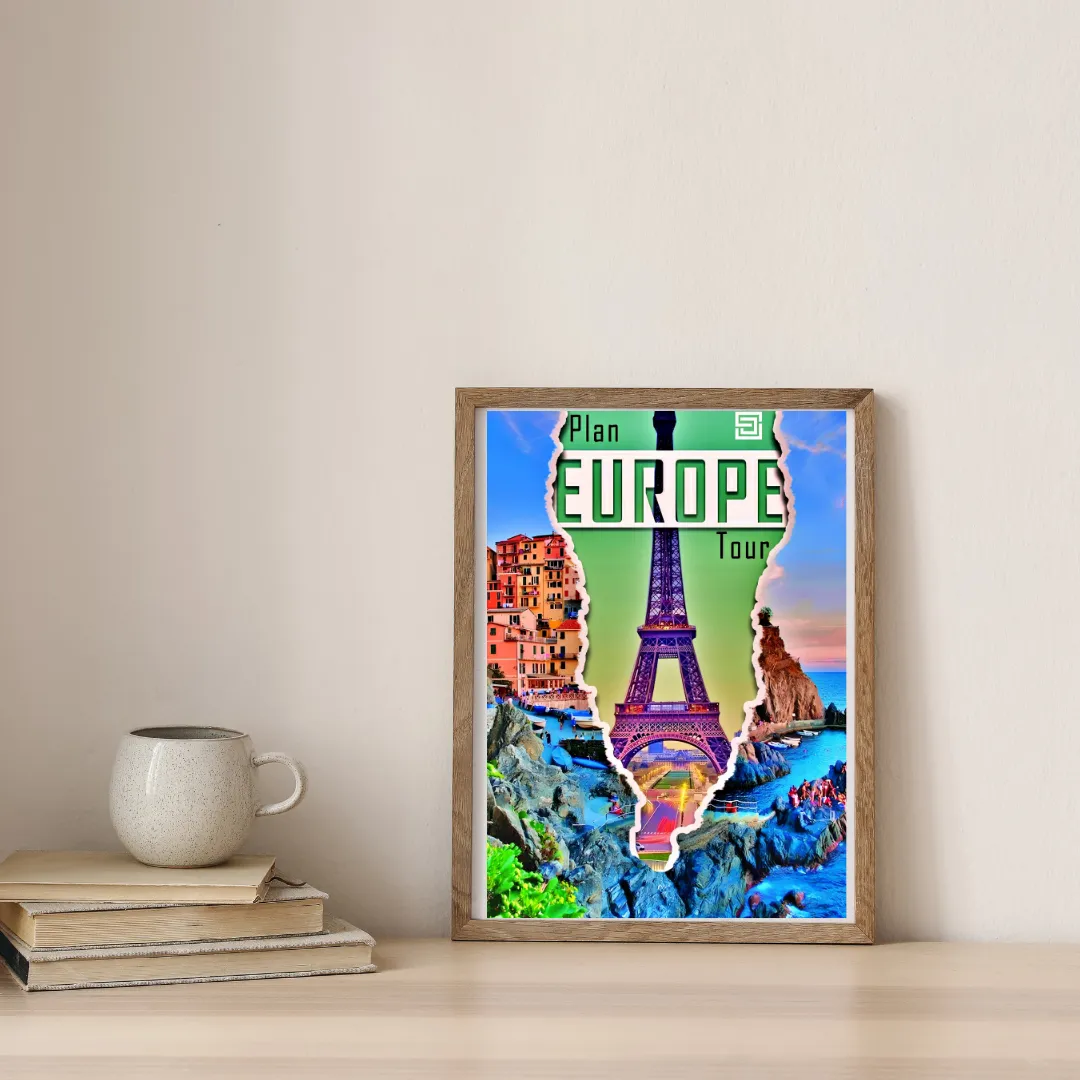
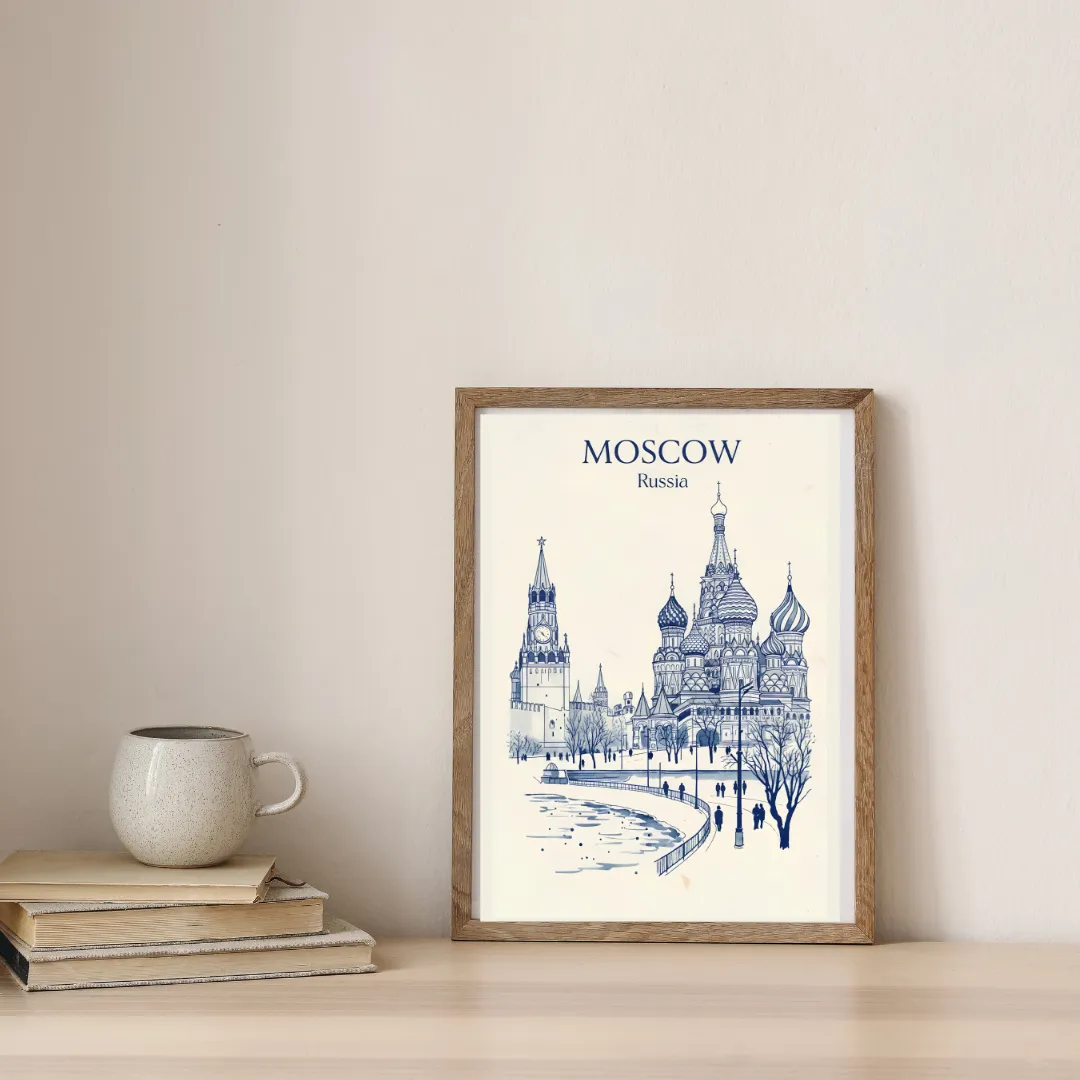
Stylised prints of cities — especially Indian cities rendered in art deco or illustrated styles — have a personal resonance that makes them conversation pieces. A Manhattan blueprint or a geometric Mumbai skyline printed at A2 creates immediate visual interest.
5. Portrait and figurative digital art
Contemporary digital illustration featuring portrait subjects — particularly those with rich colour and expressive detail — anchor a room in the same way traditional oil portraits do, without the ₹50,000 price tag.
Gallery walls: making multiple affordable pieces look curated
A gallery wall done right looks like a carefully assembled collection. Done wrong, it looks like a yard sale. The difference is in the planning.
For a high-end gallery wall on a budget:
- Stick to one frame style. Mix sizes, not finishes. All black frames, all natural wood, or all white — pick one and commit.
- Use an odd number of pieces. Three or five pieces look more dynamic than two or four.
- Maintain consistent gaps. 3–4 inches between each frame. Measure before drilling.
- Anchor with one large piece. Build the arrangement around one A2 or A1 print, then place smaller pieces around it.
- Keep a consistent colour thread. Each piece doesn't need to match, but there should be one shared colour — even a single tone — running through the collection.
Where to buy affordable digital art prints in India
The quality of the print matters as much as the art itself. A beautiful image printed on thin paper with cheap ink will look flat and fade within months. Here's what to look for and where to find it:
What to check before buying
- Paper weight: 200 GSM or above for matte prints, heavier for canvas
- Ink type: pigment inks last 75+ years; dye inks fade within 3–5 years in Indian sunlight
- Print resolution: 300 DPI minimum for A2 and above
- Domestic shipping: printed and fulfilled in India means faster delivery and easier returns
Lurevi
Lurevi is a curated digital art gallery built specifically for the Indian market. Every piece is digital-native — created digitally from the start, not a scan of a traditional painting. Prints start from ₹320 on 200 GSM archival matte paper with pigment inks, and ship across India with free delivery above ₹999. The collection is deliberately small and curated, which means you're not sifting through thousands of listings.
Other options
Mojarto and Finaart offer a broader range including traditional and digital work. Society6 ships to India from abroad and has a large catalogue, though delivery times and import costs are higher. For custom framing alongside prints, local framing shops in metros often offer package deals.
Room-by-room quick guide
| Room | Best art style | Size | Placement tip |
|---|---|---|---|
| Living room | Abstract, landscape, bold colour | A1 or larger | Centre of main wall, eye level at 57 inches from floor to centre |
| Bedroom | Botanical, figurative, soft tones | A2 or 3× A3 | Above headboard, 6–8 inches above the headboard top |
| Home office | Line art, motivational, architectural | A3 or A2 | In your video call background or directly facing your desk |
| Kitchen / dining | Food art, botanical, warm tones | A4 to A3 | On the wall facing the dining table, not above the stove |
| Bathroom | Minimal, line art, nature | A4 | Avoid direct moisture exposure — keep away from shower spray |
Frequently asked questions
What wall art looks expensive but is actually affordable in India?
Digital art prints on 200 GSM matte paper or canvas look premium but cost a fraction of original paintings. Oversized prints in simple frames, abstract art, and botanical prints consistently read as high-end in Indian interiors.
What size wall art looks best in an Indian living room?
For a standard Indian living room wall (8–10 feet wide), a single A1 (594×841mm) or 24×36 inch print makes a strong statement. Alternatively, a grid of three A3 prints hung together creates a gallery wall effect that fills the space without a single large piece.
How do I frame affordable wall art to make it look expensive?
Use thin black or natural wood frames with a white mat board. The mat adds visual breathing room and makes a ₹200 frame look like it cost ₹2,000. Avoid gold ornate frames unless the art style specifically calls for it.
Where can I buy affordable digital art prints in India?
Lurevi offers curated digital art prints starting from ₹320, printed on archival paper and shipped across India. Other options include Mojarto and Finaart for a broader range of styles.
Is digital wall art as good as original paintings for home decor?
For most home decor purposes, yes. High-resolution digital art printed on 200 GSM archival paper with pigment inks is virtually indistinguishable from original prints at arm's length, and far more consistent in colour accuracy.
The bottom line
Expensive-looking wall art isn't about the price of the piece — it's about going large enough, framing it properly, and buying from a source that takes print quality seriously. A ₹400 digital art print from a curated gallery, printed at 300 DPI on archival paper, matted and framed in a simple black frame at A1 size, will stop guests in their tracks every time.
The mistake isn't buying affordable art. The mistake is buying affordable art and then treating it like it's affordable — small sizes, thin frames, tight placement. Give it the same presence you'd give an expensive piece, and it'll perform like one.
Browse the Lurevi collection to find curated digital art prints for every room — starting from ₹320, shipped across India.
Explore our related collections: Cars Art, Motivational Art, Still Life Art