Home Decor Guide · June 2026 · 8 min read
Digital illustration for every room: a room-by-room guide
Keywords: digital illustration, digital wall painting
The right piece of wall art doesn't just fill a gap on your wall — it anchors a room, and digital illustration home decor has revolutionized how we achieve this. Digital illustration and digital wall painting prints make it possible to bring museum-quality, original artwork into Indian homes at a fraction of what physical paintings cost. Here's exactly how to use them, room by room.
1. Living room — make a statement
Tone: Bold, expressive · Size: A1 or larger · Gallery walls work well
The living room is where digital illustration does its best work. It's the room where you host guests, spend evenings unwinding, and express your aesthetic most openly — so it deserves the boldest piece in your home.
What works
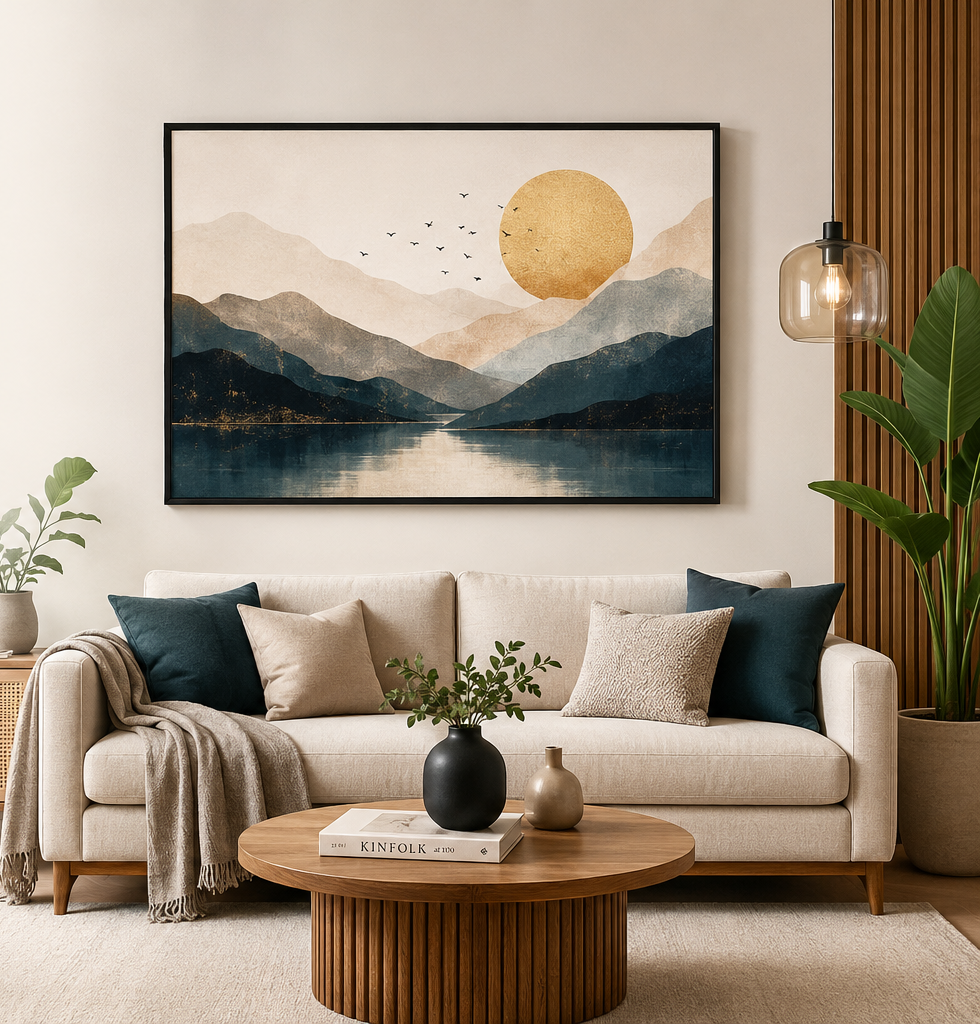
For a single hero piece, choose a large-format digital wall painting — at least A1 (59×84 cm) — with strong composition and colour. Abstract digital illustrations in deep blues, terracottas, or sage greens sit beautifully against the whites and off-whites that dominate Indian living rooms, incorporating these into your digital illustration home decor scheme.
If your sofa faces the wall, that wall is your canvas. Centre the print so its midpoint sits roughly at seated eye level — about 120–130 cm from the floor. Don't hang it higher; art hung too high floats, disconnected from the furniture below.
Gallery walls
A gallery wall of 5–7 prints in A3 and A4 frames creates a collected, editorial feel without any single piece needing to bear the full visual weight. Mix portrait and landscape orientations. Keep frames in the same finish (all black, all natural wood, or all white) for cohesion, and vary the illustration styles for interest.
Lurevi tip
Pull one colour from your sofa or cushions and use it as a filter when browsing. A print that echoes even one tone from your furniture will feel intentional, not accidental.
For living rooms with a lot of colour — jewel-toned walls, colourful furniture, patterned rugs — choose prints with a strong neutral anchor: predominantly black-and-white digital illustrations, or pieces where black, gold, or white are dominant. This prevents visual competition and lets the print breathe. These principles are key to harmonious digital illustration home decor.
2. Bedroom — calm and considered
Tone: Soft, restful · Size: A2 above headboard, A3 bedside · Pairs work well
The bedroom is about calm. Where the living room can carry something bold and energetic, the bedroom rewards restraint — softer palettes, quieter compositions, illustration styles that don't demand too much when you're winding down.
Above the headboard
A single horizontal A2 print centred above your headboard is the most versatile option for most Indian bedrooms. Botanical digital illustrations, soft abstract washes, or landscape digital paintings work particularly well here — any style with horizontal movement or a calm, settled composition. These styles are ideal for tranquil digital illustration home decor in the bedroom.
If your headboard is tall or dark, go lighter: pale botanical illustrations or white-dominant digital prints will pop. If your headboard is light-coloured or absent, you have more freedom — a deeper, richer digital painting adds warmth.
A paired set
Two matching A3 prints, one on each side of the bed, create a symmetry that feels intentional and hotel-like. Choose prints from the same series or in the same colour palette. Abstract digital illustration diptychs are particularly well-suited to this format.
Lurevi tip
Avoid prints with high contrast or very busy compositions in the bedroom. Favour illustrations with generous negative space — your brain will thank you at the end of a long day.
3. Home office — focus and inspiration
Tone: Motivating, textured · Size: A2 or A3 behind monitor · Minimal framing preferred
The home office has become the most designed room in many Indian homes. Your wall is visible to colleagues and clients on video calls — it's worth thinking about. Making thoughtful choices for your digital illustration home decor in this space is crucial.
What reads well on camera
High-contrast digital illustrations — black ink on cream, or bold colour on white — read clearly on camera without becoming distracting. Avoid very dark prints directly behind you on calls. Lighter, more graphic illustration styles give a clean, considered backdrop.
Facing your desk
If you sit with your back to the wall, you're free to choose whatever inspires you. Abstract digital art is particularly effective here — stimulating without being distracting. Architectural digital illustrations, typographic art, and geometric digital paintings are popular choices for working environments. These elements can significantly enhance your digital illustration home decor for a productive workspace.
Lurevi tip
One A2 print in a simple black frame, mounted at eye level while seated (roughly 100–110 cm midpoint from floor), is the most effective formula for a home office wall.
4. Kids' room — playful character illustration
Tone: Bright, whimsical · Size: A3 at child's eye level · Multiple prints encouraged
Children's rooms are where digital illustration really earns its keep. Unlike a painted mural, a print can be swapped out as tastes change — a toddler who loves dinosaurs becomes a seven-year-old who wants something different. This flexibility makes digital illustration home decor perfect for evolving kids' spaces.
Hang at their eye level
Hang prints so the centre of the image sits at approximately 90–100 cm from the floor for young children. This makes the art feel like it belongs to them, not to the room's adult aesthetic.
Illustration styles that age well
Character-driven digital illustrations with clean linework and flat colour tend to age better than overly trendy styles. Nature illustrations, playful maps, celestial themes, and abstract shapes are enjoyed by children across a wide age range.
Lurevi tip
A set of three A3 prints — slightly mismatched in subject but unified by colour palette — creates a gallery wall that children love. Let them pick one of the three.
5. Hallway — first and last impression
Tone: Graphic, confident · Size: A3 portrait or narrow vertical · Lighting matters most here
Hallways are underrated. Every person who enters your home passes through yours — yet most remain bare. A well-placed print creates the kind of quiet confidence that leaves a lasting impression.
The right format
Portrait-orientation digital illustrations — tall, vertical compositions — work best in hallways. A single A3 portrait print at eye level (135 cm midpoint) in a well-chosen frame is all you need. Resist the temptation to fill every wall; one good piece is more powerful than five indifferent ones.
What subjects work
Architectural digital illustrations, portrait-style abstract art, and botanical digital paintings are well-suited to hallways. They invite a second look without demanding it. Elevate your entryways with striking digital illustration home decor.
Lurevi tip
If your hallway has a controllable light source, direct it at the print. Even a simple clip-on spotlight transforms how a print reads — the art appears considered and curated rather than incidental.
Universal sizing guide for Indian homes
| Room / Wall | Recommended print size | Notes |
|---|---|---|
| Living room feature wall | A1 (59×84 cm) or larger | Single hero print or gallery of 5–7 |
| Above bedroom headboard | A2 (42×59 cm) horizontal | Centre at 120–130 cm from floor |
| Bedside / paired prints | A3 (30×42 cm) | Matching or series prints |
| Home office (behind monitor) | A2 or A3 | High contrast; legible on camera |
| Kids' room | A3 (30×42 cm) | Hang at 90–100 cm midpoint |
| Hallway | A3 portrait (30×42 cm) | Vertical orientation preferred |
Rule of thumb: Your print should cover roughly 60–75% of the wall width it sits on. When in doubt, go larger — undersized prints floating on large walls are the single most common decorating mistake.
Shop Lurevi's digital illustration prints
Every piece in the Lurevi collection is available as an archival-quality print, shipped anywhere in India. Filter by room, style, or colour to find the one that belongs on your wall. Discover the perfect digital illustration home decor to transform your space.
Frequently asked questions
What size digital illustration print should I buy for my living room?
For a standard Indian living room wall, a 24×36 inch or A2 print works well as a centrepiece. If you're creating a gallery wall, mix A3 and A4 prints. Always measure your wall first and leave at least 15–20 cm of breathing space on each side.
Is digital illustration the same as digital painting?
Not exactly. Digital illustration typically uses clean lines, flat or semi-flat colours, and a graphic quality — think editorial or poster art. Digital painting mimics traditional painting techniques with brushstrokes, blending, and texture. Both make stunning wall prints; the choice depends on your interior style.
Which rooms work best with digital wall painting prints?
Every room works — it's about choosing the right style. Living rooms suit bold statement pieces. Bedrooms call for calmer palettes. Home offices benefit from motivating or abstract prints. Kids' rooms shine with playful character illustrations. Hallways work beautifully with narrow vertical prints. The versatility of digital illustration home decor means there's a perfect print for every room.
How do I match a digital illustration print to my existing furniture?
Pull one accent colour from your furniture or cushions and look for prints that feature that colour. For neutral interiors, almost any print works — bold colours will pop, muted tones will harmonise. For colourful Indian interiors, choose prints with a dominant neutral that grounds the composition. Matching prints to your existing style is key to cohesive digital illustration home decor.
Can I order custom-size digital art prints from Lurevi?
Yes. Lurevi offers standard sizes (A4, A3, A2, A1) and custom sizing on request. Write to us at hello@lurevi.in with your wall dimensions and we'll advise on the best fit.