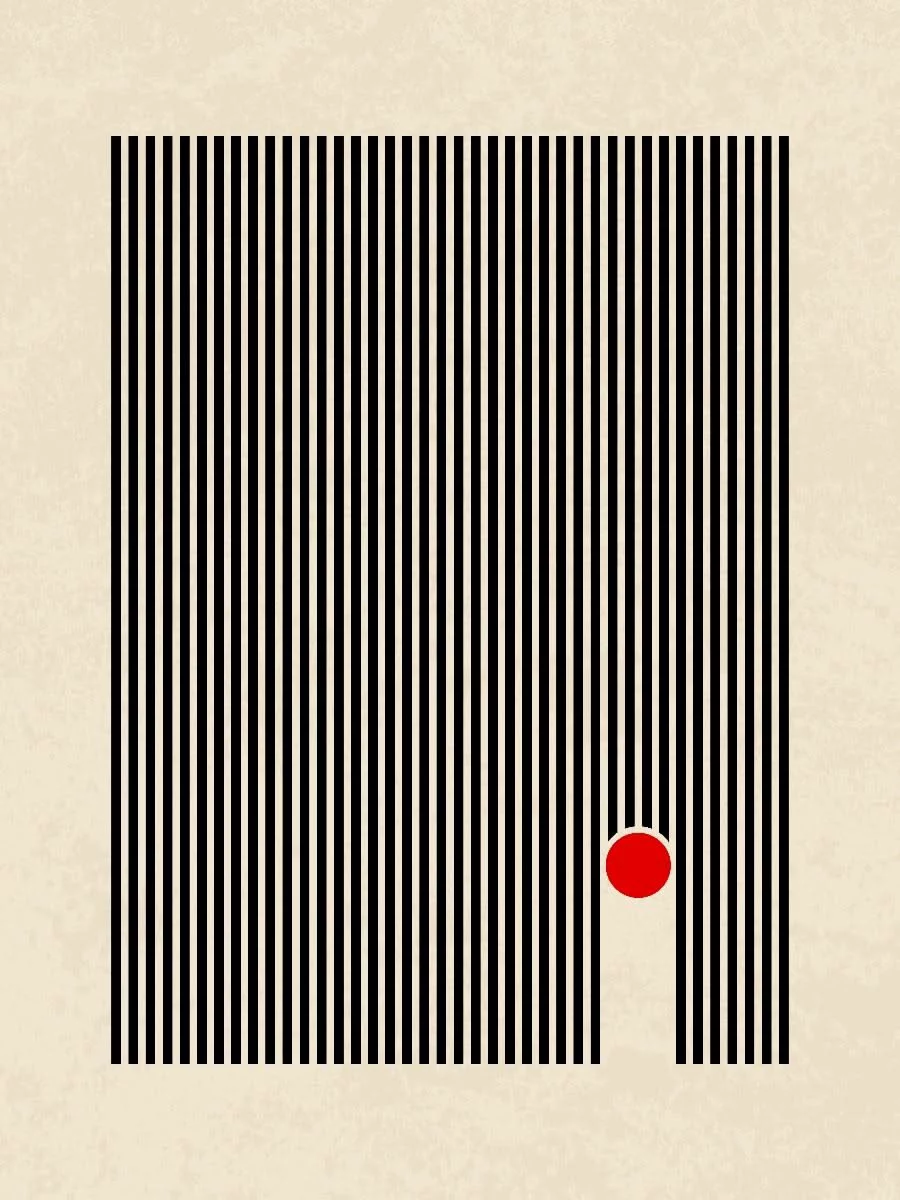
10 digital art styles to know before buying prints
Choosing a print for your wall feels easy until you're actually doing it. There are hundreds of options, and most listings just say "digital art" — which tells you almost nothing. Knowing the style you're looking at changes everything: how a piece feels in a room, whether it suits your aesthetic, and whether it'll still feel right in five years.
Here are the 10 most popular digital art styles, what makes each one distinct, and how to use them at home.
1. Flat illustration
Flat illustration uses clean shapes, solid fills, and almost no shading or depth. Colours are bold and deliberate. Lines are confident. There are no gradients trying to mimic light — everything is intentionally two-dimensional.
Works best in
Kids' rooms, home offices, Scandinavian or minimalist interiors. Pairs well with white walls and light wood furniture.
What to look for
Consistent colour palettes (2–4 colours), geometric shapes, strong negative space.
2. Line art
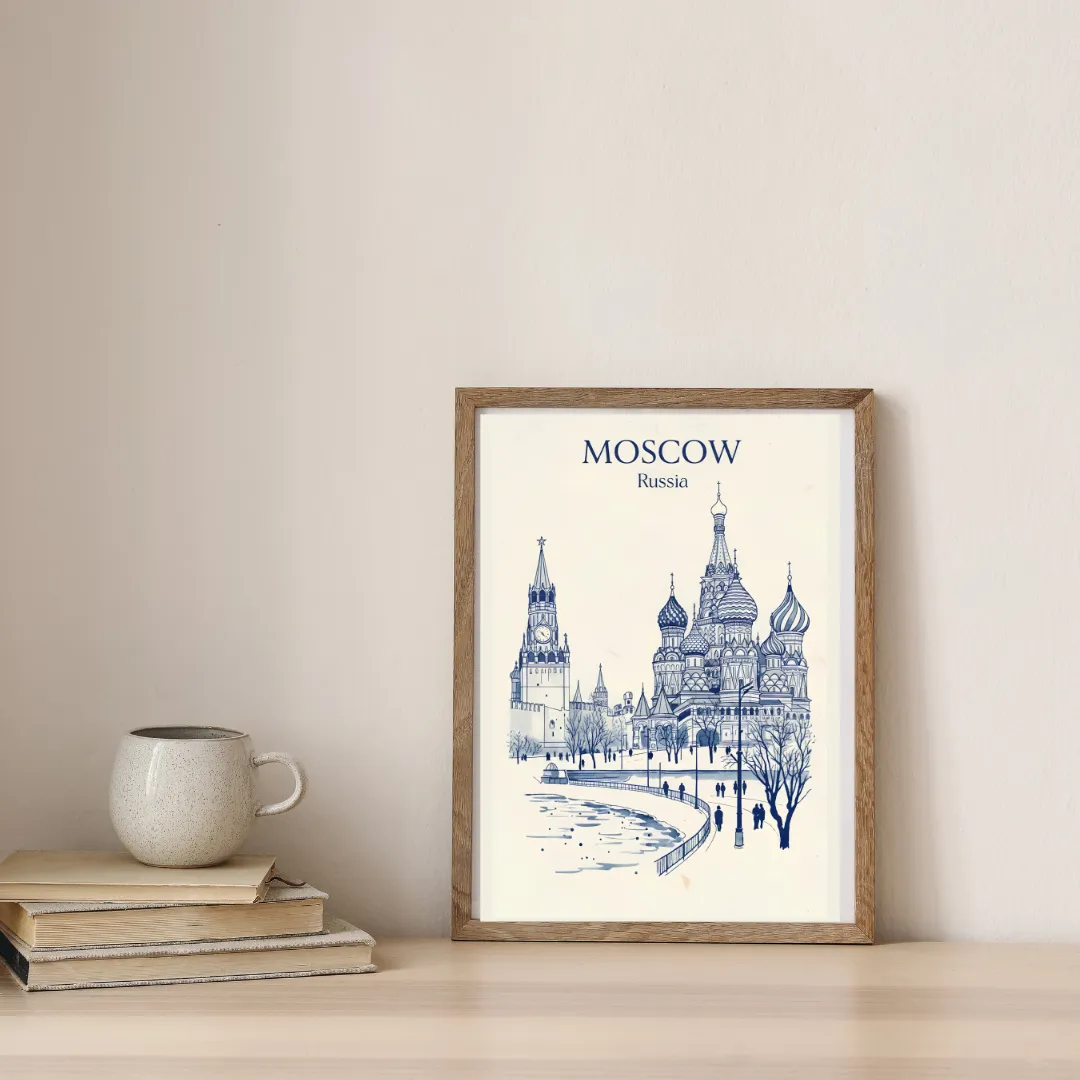
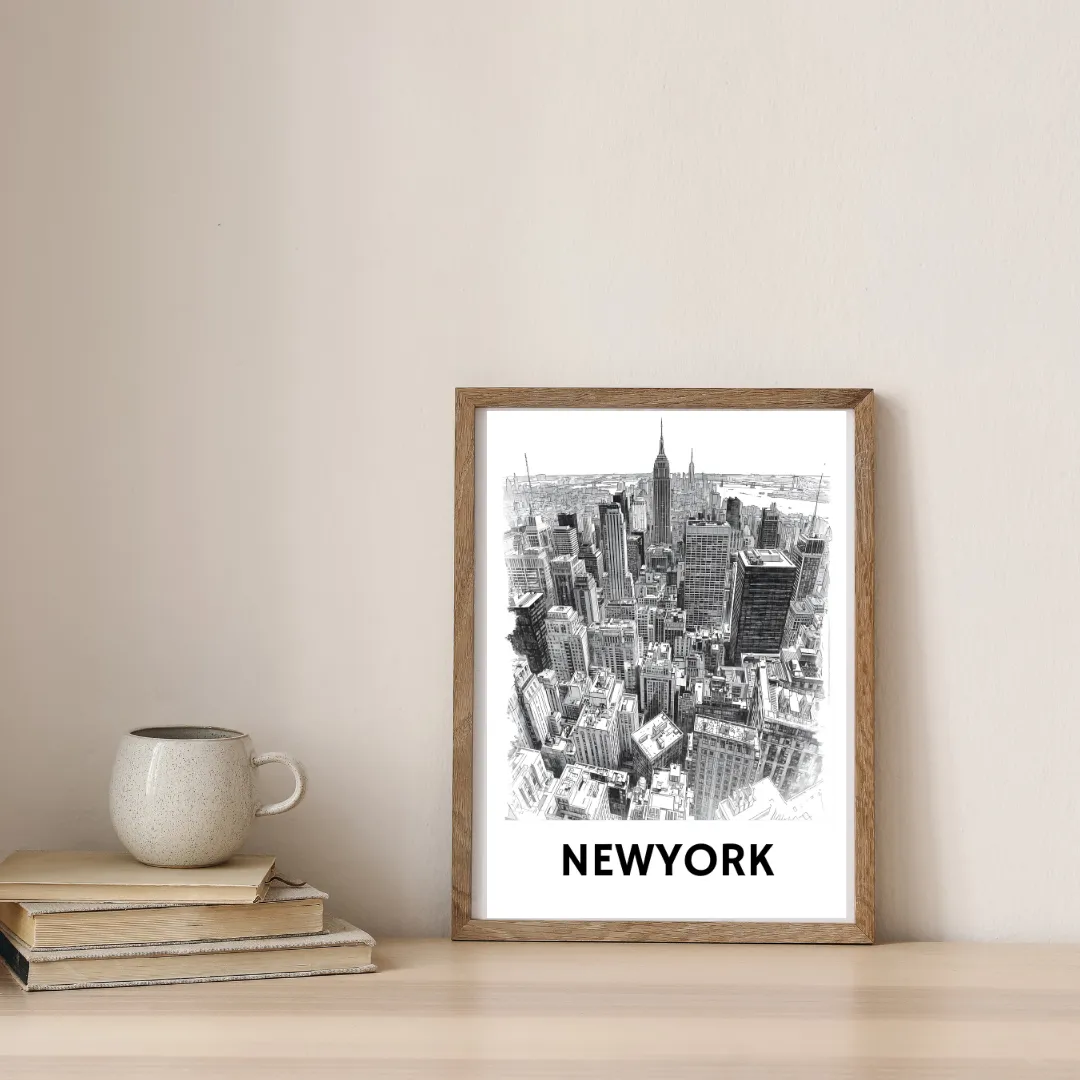
Line art is artwork defined almost entirely by lines, with minimal or no fill. The skill is in the line weight, the composition, and what's left out. A single continuous line drawing of a face or a botanical can be more striking than a heavily rendered piece.
Works best in
Neutral interiors, gallery walls, bathrooms and bedrooms. Looks particularly good in black frames on white or cream walls.
What to look for
Confident, unbroken strokes. Avoid pieces where the linework looks hesitant or scratchy.
3. Digital painting
Digital painting replicates the look and texture of traditional oil or acrylic painting using software. Brushstrokes are visible. Colours blend softly. There's a warmth and depth that feels familiar — because it draws from centuries of painting tradition, just executed on a screen.
Works best in
Living rooms, dining areas, traditional or eclectic interiors. Creates a focal point without feeling cold or clinical.
What to look for
Visible brushwork, layered colour, a sense of light and shadow. If it could pass for a canvas painting, that's a good sign.
4. Digital illustration
Digital illustration sits between flat design and painting — more rendered than flat art, but more graphic than digital painting. Characters, scenes, and editorial visuals often fall into this category. Think book covers, magazine spreads, and detailed storytelling images.
Works best in
Eclectic interiors, creative spaces, living rooms where you want a piece with narrative depth.
What to look for
Detail and intentionality. Good digital illustration rewards time spent looking — you keep noticing new things.
Read our digital illustration guide →
5. Generative / algorithmic art
Generative art is created using code and mathematical systems rather than a traditional drawing process. The artist writes rules; the algorithm executes them — sometimes with elements of randomness. The results often look organic despite being entirely computational: flowing curves, fractal patterns, emergent structures.
Works best in
Modern, tech-forward, or design-led interiors. Particularly striking in large format prints.
What to look for
Complexity that rewards close inspection. Pieces that look different at different distances.
6. Glitch art / digital collage
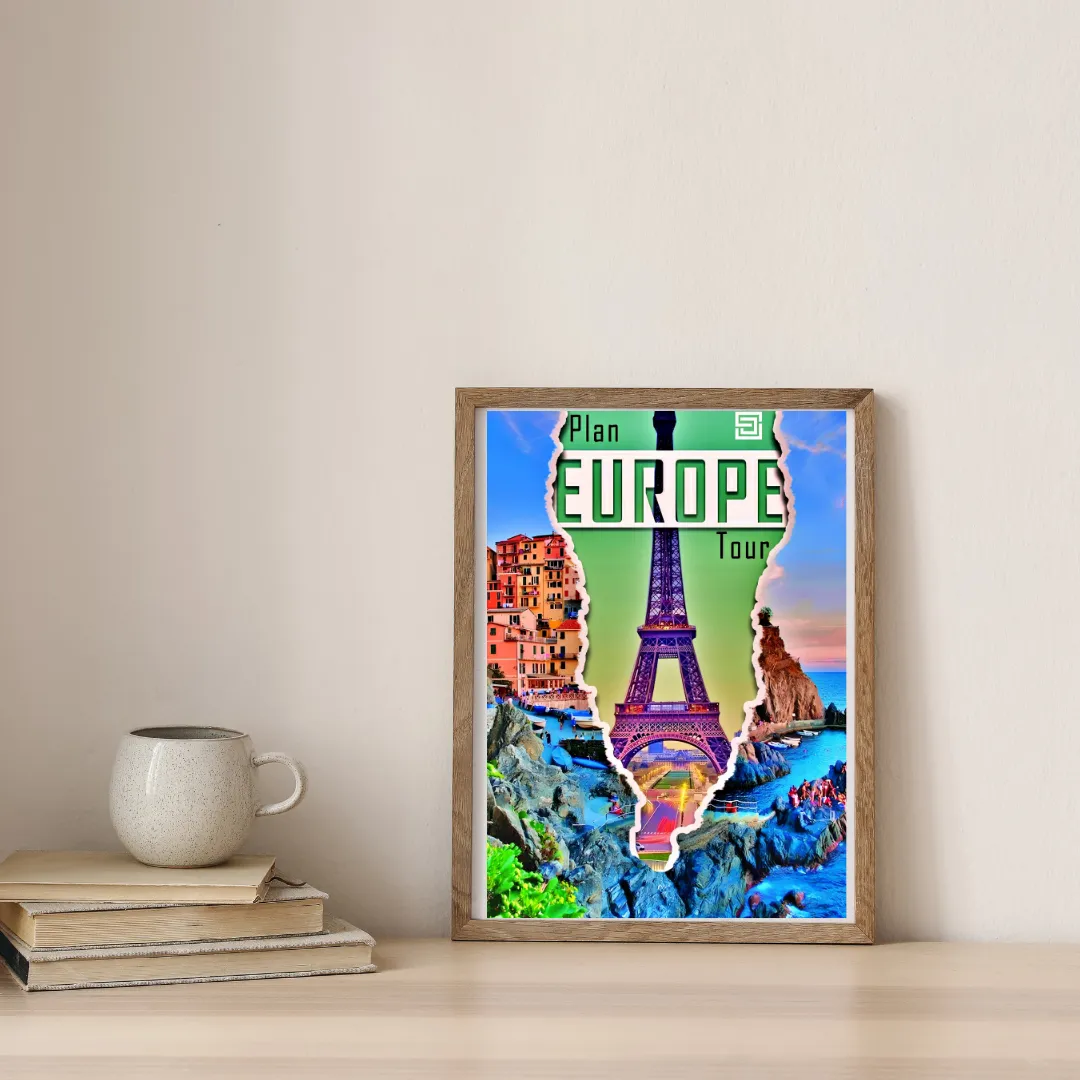
Glitch art embraces visual corruption — deliberate pixel displacement, colour channel splits, scan-line artefacts — to create something that feels both broken and beautiful. Digital collage layers photography, illustration, and texture in unexpected combinations.
Works best in
Urban interiors, music studios, spaces with an industrial or experimental edge. Statement pieces more than background art.
What to look for
Controlled chaos. The best glitch and collage work has a clear compositional logic underneath the noise.
7. Abstract digital art
Abstract digital art prioritises colour, form, and emotion over representation. There's no subject to identify — just shapes, gradients, and movement. It's one of the most versatile styles because it adapts to the room around it rather than competing with it.
Works best in
Practically anywhere. Especially strong in living rooms and bedrooms where you want atmosphere without narrative.
What to look for
Colour palettes that complement your existing furnishings. Abstract art that clashes with your room's tones will always feel wrong.
8. Dark fantasy / surreal
Surreal and dark fantasy digital artwork draws on mythology, dreamscapes, and the uncanny. Rich, moody palettes — deep blues, burnt oranges, blacks. Subjects that exist just outside the edge of reality.
Works best in
Darker, more dramatic interiors. Reading corners, home libraries, spaces where you want atmosphere.
What to look for
Strong lighting and a clear emotional tone. The best surreal work has an internal logic — it feels like a world, not just a visual accident.
9. Pixel art
Pixel art uses a deliberately low-resolution aesthetic — visible square pixels, a limited colour palette, and a retro sensibility inherited from early video games. As a print, it reads as nostalgic but contemporary.
Works best in
Gaming setups, kids' rooms, creative or playful spaces. Works well as part of a curated gallery wall rather than a solo statement piece.
What to look for
Clarity at scale. Good pixel art is intentional at every pixel. Vague or muddy pieces tend to look better on screen than in print.
10. Minimalist / typographic
Minimalist digital art reduces everything to its essentials — a single shape, a word, a moment of white space. Typographic prints use lettering as the primary visual element: a quote, a single word, or letterforms as pure form.
Works best in
Modern kitchens, home offices, hallways. Pairs well with other prints in a gallery wall.
What to look for
Restraint. The best minimalist work makes you feel something with almost nothing. If it feels empty rather than considered, look elsewhere.
How to choose the right style for your space
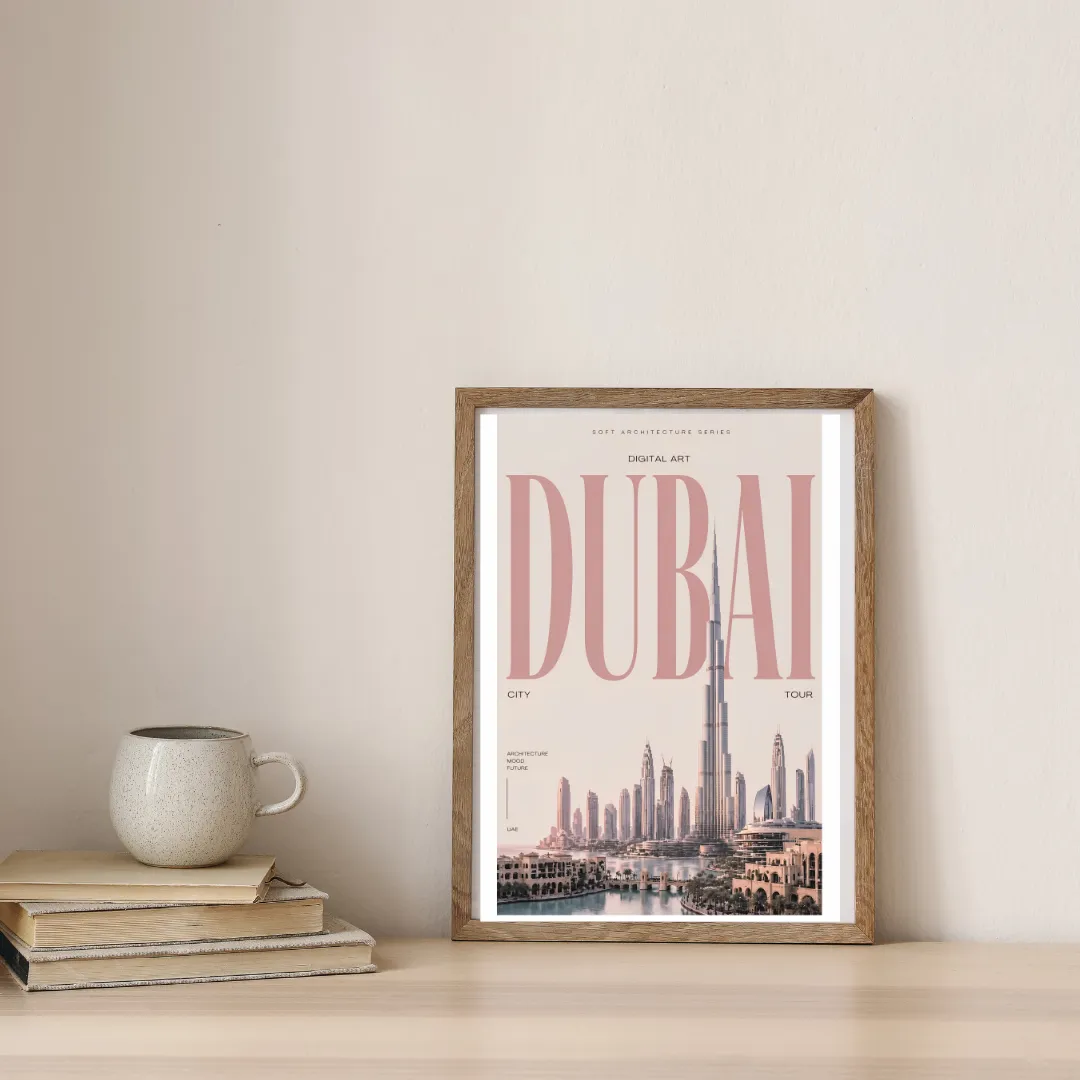
Match the style to the mood of the room, not just the colour scheme. A flat illustration in a room full of soft textures will feel out of place. A dark surreal piece in a bright, airy space will fight the room rather than complement it. Think about the emotional register of the space first — calm, energetic, playful, dramatic — and then find a style that sits in the same register.
Size matters as much as style. Detailed styles like digital illustration and generative art reward larger formats. Line art and minimalist prints can work beautifully at smaller sizes.
And if in doubt: line art and abstract digital prints are the two most versatile styles in any interior. They work almost everywhere.
Browse Lurevi's curated collection of digital art prints — organised by style, size, and room.
Related reading
- What is digital art? A complete guide
- Digital illustration explained
- Digital artwork for your home: how to choose the right piece
FAQ
What is the most popular digital art style for home decor?
Abstract digital art and flat illustration are the most popular styles for home interiors. Abstract art works in almost any room, while flat illustration suits modern and minimalist spaces particularly well.
Which digital art style suits a minimalist home?
Line art and minimalist typographic prints work best in minimalist interiors. Both use strong negative space and restrained palettes that complement clean, uncluttered rooms.
Are digital art prints the same quality as traditional prints?
Yes — when printed on archival paper or canvas using high-resolution files, digital art prints are indistinguishable in quality from prints made from traditional artwork. The key is print resolution (300 DPI minimum) and paper quality.
Where can I buy digital art prints in India?
Lurevi offers a curated collection of digital art prints available across India, with free shipping. Each print is produced on premium archival paper.
Explore our related collections: Monochrome Art, Forest Art, Food Art