Vintage Wall Art Prints India: Retro Posters for Modern Homes — The 2026 Guide
Nostalgia, it turns out, has excellent taste. Vintage wall art prints are having one of the most sustained and genuinely interesting moments in Indian home décor in recent memory — and the reason isn't simply that people miss the past. It's that the visual language of a good era travels extremely well: the clean geometry of Art Deco, the hand-lettered warmth of mid-century travel posters, the faded grandeur of old Bollywood lobby cards, the earthy palette of vintage Indian railway prints. These aren't relics. In a modern Indian home with clean lines and contemporary furniture, a well-chosen retro poster doesn't look out of place — it looks intentional, layered, and considerably more interesting than the sixth abstract print in a row that all roughly agree with each other. This guide covers the styles, the placement logic, the gifting occasions, the sizing rules, and everything you need to know to buy vintage art prints in India that feel curated rather than accumulated.
Why Vintage Prints Work So Well in Modern Indian Homes
There's a design principle at work here that's worth naming: contrast creates interest. A room where everything is from the same aesthetic era, the same visual vocabulary, the same temperature of colour tends toward a kind of well-decorated blandness — pleasant but unremarkable, a mood board made real but not quite a home. Introducing a vintage or retro print into a contemporary space creates productive tension: old and new in conversation, the past made present, a room that looks like it was assembled by a person with a point of view rather than a single shopping session.
Indian homes have always been good at this kind of layering. We are a culture that has, for centuries, combined the ancient and the contemporary without treating the combination as a contradiction — a brass diya on a marble kitchen counter, a Madhubani painting above a sectional sofa, a grandmother's Kanjeevaram saree draped over a mid-century chair for a photograph. Vintage wall art fits naturally into this tradition. It's not decoration; it's continuity. And it's the kind of continuity that gets better the more you look at it, which is the best thing you can say about anything on a wall.
The Styles: A Field Guide to Vintage and Retro Art Prints
Vintage is not a single aesthetic — it's a broad category that spans roughly a century of visual culture and encompasses styles that are, in some cases, more different from each other than they are from contemporary art. Knowing which corner of the vintage world you're drawn to is the difference between a home that feels deliberately considered and one that feels like it inherited everything from a particularly well-travelled relative. Both are interesting, but only one is intentional.
Art Deco Prints
The 1920s and 1930s gave the world Art Deco — a style of such confident geometric glamour that it has refused to date for nearly a hundred years, which is an achievement that deserves considerably more credit than it gets. Bold symmetry, stylised natural motifs (sunbursts, florals reduced to geometry, stylised animals), deep jewel colours offset by gold and black, and a general attitude that beauty is a moral obligation — Art Deco prints bring all of this to a wall without requiring the wall to do anything except exist and be grateful. They work in living rooms, dining rooms, entryways, and bedrooms with equal conviction, and they have the rare quality of looking both expensive and timeless regardless of what they actually cost. The Chrysler Building has the same energy and is considerably harder to hang.
For Indian homes specifically, Art Deco has a particular resonance — Bombay (now Mumbai) was one of the world's great Art Deco cities, with an entire neighbourhood (Marine Drive to Oval Maidan) listed as a UNESCO World Heritage Site for its Art Deco architecture. Prints referencing this heritage — stylised Bombay cityscapes, Indian Art Deco ornamental motifs, South Mumbai architectural illustrations — are among the most meaningful vintage prints an Indian home can contain. They're not just aesthetically appropriate; they're historically ours.
Vintage Indian Travel and Railway Posters
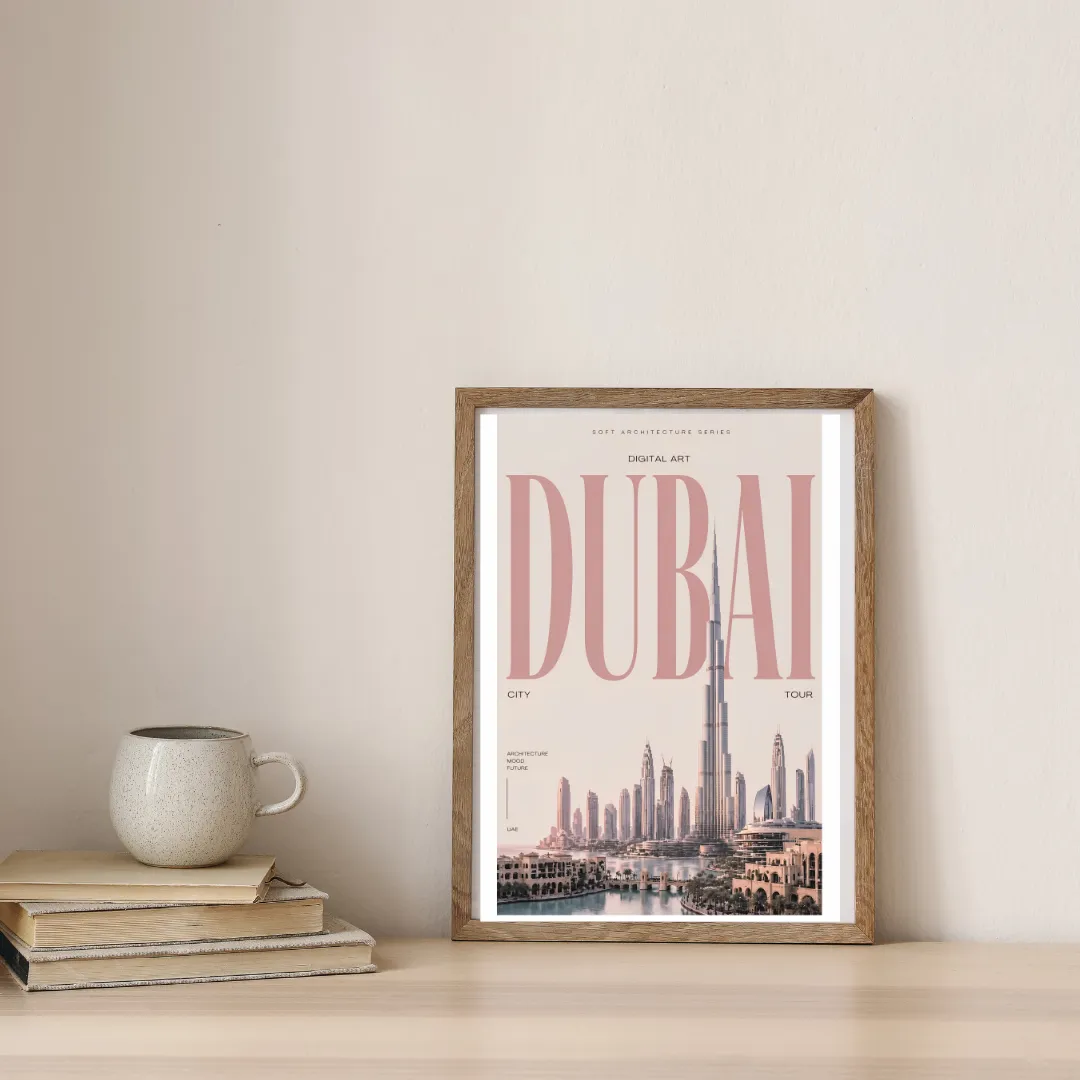
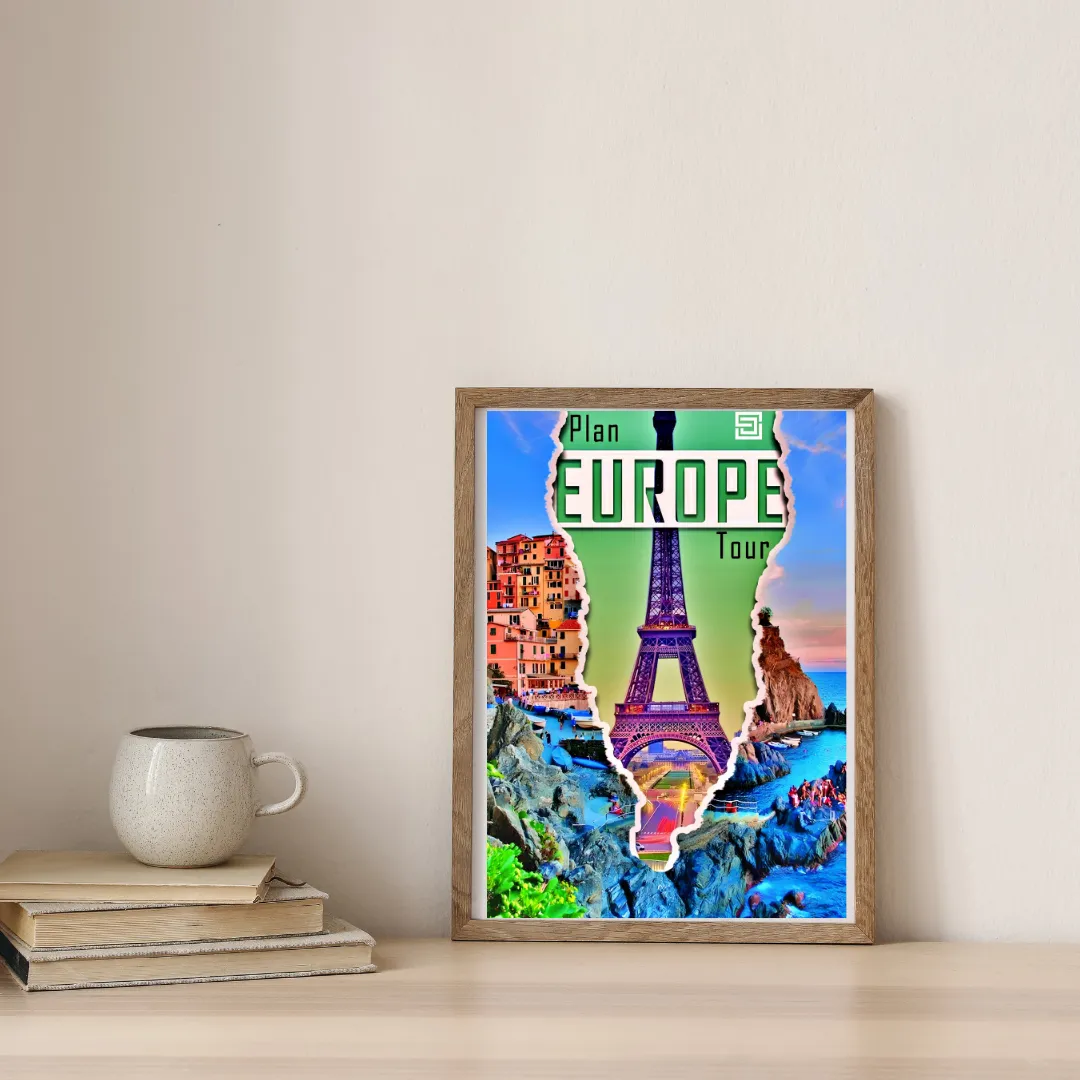
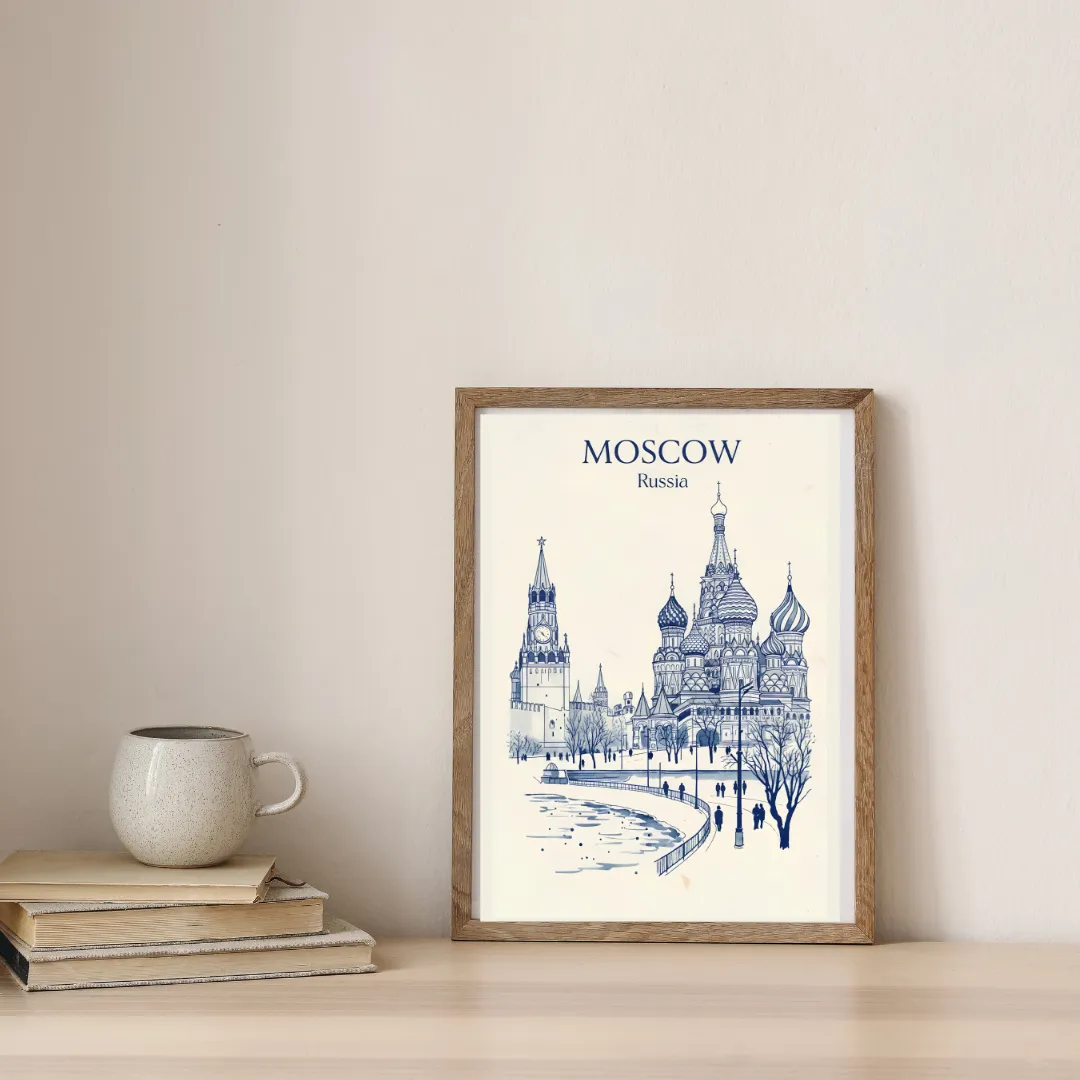
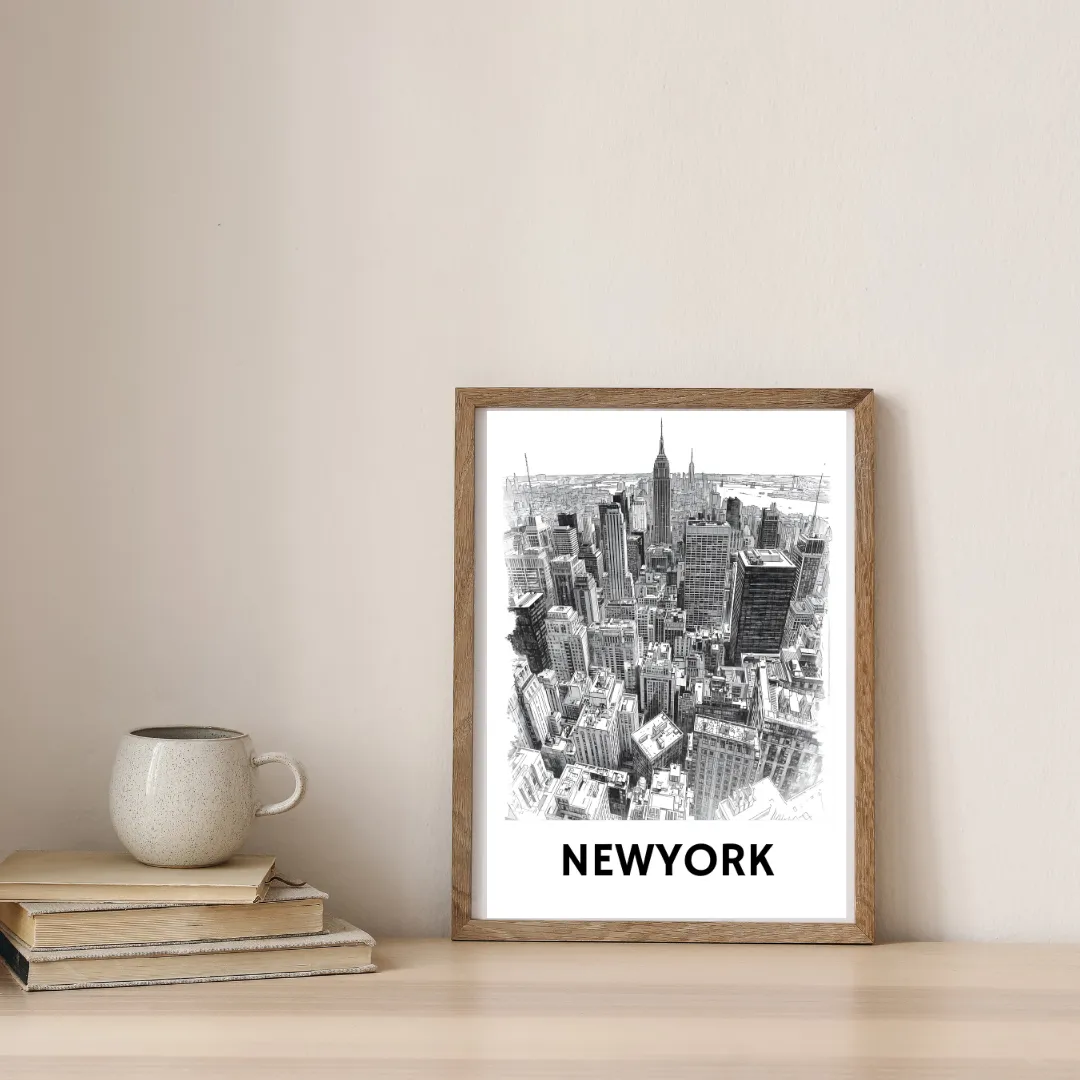
Between the 1920s and 1960s, Indian Railways and various tourism bodies produced some of the most beautiful travel poster art in the world — and almost nobody outside the design community knows this, which is a state of affairs that vintage art prints are slowly and delightfully correcting. These posters advertised destinations across the subcontinent in a style that blended Western poster design conventions with distinctly Indian colour sense and subject matter: the ghats of Varanasi, the beaches of what was then called Ceylon, the hill stations of Simla and Ooty, the temples of Madurai, the palaces of Rajputana. The results are prints that are simultaneously Indian, globally sophisticated, and completely unlike anything being made today — which is precisely what makes them so effective as contemporary wall art. They look like they belong on the wall of someone who knows something, which is a highly desirable impression to create.
Mid-Century Modern Illustration Prints
The aesthetic of the 1950s and 1960s — characterised by flat colour fields, elegant negative space, geometric sans-serif typography, and a general faith that the future was going to be designed well — has aged into something that feels both nostalgic and contemporary simultaneously. Mid-century modern illustration prints sit perfectly in Indian homes with clean, uncluttered aesthetics: a 1950s-style print of a steaming cup of chai, a retro poster of a Bollywood cinema, an illustrated magazine cover from Independence-era India. These prints carry warmth and humour in a register that more refined vintage styles sometimes don't — they're the art world's equivalent of a genuinely funny uncle at a wedding: you didn't expect to be charmed, and then there you are, completely charmed.
Vintage Botanical and Natural History Prints
Before botanical illustration became a contemporary art form, it was scientific documentation — and the 18th and 19th century naturalists who produced detailed, hand-coloured illustrations of Indian flora, fauna, and geological specimens left behind a visual archive of staggering beauty. Vintage-style botanical prints (or faithful reproductions of actual historical illustrations) have a quality that contemporary botanical art sometimes lacks: the weight of genuine curiosity, the beauty of something made to be accurate before it was made to be lovely. These prints work in studies, dining rooms, and bedrooms with the kind of quiet authority that doesn't announce itself and doesn't need to.
Old Bollywood and Indian Cinema Posters
Hand-painted Bollywood lobby cards and cinema posters from the 1950s through the 1980s represent one of India's most distinctive and underappreciated visual art traditions — a form that combined the graphic boldness of commercial poster art with a specifically Indian sense of colour, drama, and emotional scale. Contemporary reproductions of these posters, or prints inspired by their aesthetic, bring something into an Indian home that no imported vintage style can replicate: a visual culture that's specifically, proudly ours. A Guru Dutt film poster print. A Raj Kapoor era illustrated lobby card. A hand-lettered Rajasthani folk theatre bill. These prints say something about identity in a way that Art Deco, however beautiful, fundamentally cannot — they say we were making extraordinary things too, and here is the evidence.
Vintage Maps and Cartographic Art
Old maps are among the most reliably beautiful things ever put on paper — they combine precise visual information with decorative flourishes (sea monsters, illustrated compass roses, hand-lettered place names in scripts that no longer exist) in a way that makes them simultaneously functional and gorgeous, which is a combination so rare it should probably have its own award. Vintage maps of India — the subcontinent as it appeared on British Survey maps of the 19th century, or in Mughal-era cartographic illustrations, or in the imaginative geography of ancient texts — make extraordinary wall art for studies, libraries, dining rooms, and homes where conversation is taken seriously as an activity. They're also among the most effective gifts for people who read: the kind of art that a book-person will stand in front of for ten minutes at a party, which is all the endorsement a gift needs.
Style Comparison: Finding Your Vintage Register
| Style | Best Room | Interior Fit | Gifting Score | Mood Created |
|---|---|---|---|---|
| Art Deco | Living room, entryway, dining | Modern, glam, eclectic | ★★★★★ | Glamour, confidence, timelessness |
| Vintage Travel / Railway | Living room, study, hallway | Eclectic, heritage, literary | ★★★★★ | Wanderlust, warmth, story |
| Mid-Century Modern | Living room, kitchen, study | Clean modern, Scandi, playful | ★★★★☆ | Wit, optimism, warmth |
| Vintage Botanical / Natural History | Study, dining, bedroom | Heritage, minimal, literary | ★★★★★ | Curiosity, quiet authority |
| Old Bollywood / Indian Cinema | Living room, media room, entryway | Eclectic, maximalist, Indian | ★★★★★ | Pride, nostalgia, vibrancy |
| Vintage Maps / Cartographic | Study, library, dining room | Literary, heritage, eclectic | ★★★★★ | Curiosity, story, depth |
Room-by-Room Guide: Where Vintage Art Prints Belong
Vintage prints have broader room-compatibility than most buyers initially assume — the instinct is often to relegate them to studies and libraries, as though nostalgia needs a dedicated room to live in. It doesn't. It lives everywhere in Indian homes, usually uninvited, always welcome.
The Living Room: Vintage as Conversation Piece
A large vintage travel poster or Art Deco print in a living room does something that purely decorative contemporary art sometimes doesn't: it gives people something to say. A beautifully framed 1930s-style Indian Railways poster of Darjeeling above a sofa is not just beautiful — it's a starting point. Every guest who notices it has an immediate, genuine response: a memory, a question, an association, an opinion about Darjeeling that will turn into an opinion about tea that will turn into twenty minutes of excellent conversation. Art that generates conversation is not frivolous; in Indian homes where the living room is a social space as much as an aesthetic one, it is quietly essential.
For gallery walls in living rooms, vintage prints from a consistent era and palette create cohesion while allowing variety in subject. Three vintage travel posters — same poster-design aesthetic, different destinations across India — in matching dark wood frames read as a curated collection. Four prints from different eras and styles in the same frames read as a charming accumulation. Both are valid; only one is intentional, and the frames are doing a lot of work in both cases.
The Study and Home Office: Vintage as Intellectual Backdrop
The study is where vintage art prints are most at home, and the logic is almost too obvious to state: a room devoted to thinking and reading is the natural habitat of art that rewards close attention, carries historical weight, and prompts the kind of lateral associations that good intellectual work runs on. A vintage natural history illustration of Indian fauna above a bookshelf. An old Survey of India map as the centrepiece of a study wall. A mid-century illustrated magazine cover framed at eye level beside a desk. These aren't decorations — they're intellectual company, the visual equivalent of interesting books left open on a side table, which is either very appealing or entirely too much depending on who you are as a person.
The Dining Room: Vintage Maps and Travel Prints
Vintage maps and travel posters suit dining rooms with a particular elegance — possibly because both maps and dining are fundamentally about journeys: where you came from, where you're going, what you found along the way, and whether the food was worth it. A large vintage map of India's coastline or a beautifully composed 1950s travel poster of a region that means something to your family creates a backdrop that makes dinner feel more like an event and less like a meal — a distinction that, in Indian homes where food is already elevated to near-ritual status, is warmly and genuinely appreciated.
The Entryway: First Impressions, Vintage Edition
A vintage print in an entryway tells a story about the home before the tour even begins. An Art Deco print in dark gold and black says something about taste and confidence. An old Bollywood poster says something about joy and cultural pride. A vintage railway poster of a hill station says something about wanderlust and memory. What it says specifically depends on which print you choose — but it will say something, which is more than a blank wall can claim, and more than most entryway art bothers to attempt. The entryway is not the place for timid art. It is the place for the piece that makes someone stop at the door and say, before they've even taken off their shoes, "where did you get that?" — which is arguably the highest compliment a piece of wall art can receive in any home in any culture anywhere.
The Bedroom: Vintage With Restraint
In bedrooms, vintage art works best when it's chosen with some care for register. Bold, high-contrast Bollywood posters or dramatic Art Deco pieces in deep jewel tones can be too stimulating for a room that asks to be calm. The better vintage choices for bedrooms: soft watercolour vintage botanical prints, muted mid-century minimalist illustrations, gentle vintage travel prints in faded ochre and dusty rose. The goal is the same as with all bedroom art — something that enriches rather than activates, that gives the eyes somewhere beautiful to rest rather than somewhere exciting to go. Vintage art, chosen correctly, does this with more warmth than almost any other category.
Mixing Vintage Prints With Modern Interiors: The Art of the Mix
The single most common anxiety about vintage art prints in contemporary Indian homes is the fear of looking mismatched — of the retro poster fighting with the modern furniture in a way that reads as confused rather than considered. This anxiety, while understandable, is largely unfounded. The mix works. It has always worked. The reason is that vintage prints, unlike vintage furniture, don't impose a period requirement on the room around them — they introduce visual history without demanding that the sofa share it.
The Three Rules of Successful Vintage-Modern Mixing
Rule 1: Let the frame do the bridging. A vintage travel poster in a clean, modern thin black frame reads as contemporary. The same poster in a heavy ornate gilded frame reads as heritage. The frame is the translator between the print's era and the room's aesthetic — choose it accordingly, and the mix almost always works.
Rule 2: Unify by palette, not period. A 1930s Art Deco print and a 2024 abstract print can coexist on the same gallery wall if they share a tonal palette — both warm and earthy, or both cool and geometric. Colour coherence covers a multitude of period mismatches, which is the kind of tolerance that most colour palettes don't get enough credit for.
Rule 3: One vintage anchor, contemporary support. The easiest approach: one strong vintage statement piece as the room's focal point, surrounded by more neutral or contemporary décor that doesn't compete with it. The vintage print gets all the attention; the rest of the room gives it the space to hold it. This is not timidity — it's editorial confidence, and it produces rooms that feel genuinely designed rather than accidentally assembled.
Vintage Art as a Gift: The Occasioned Nostalgia Play
Vintage prints are among the most thoughtful gifts in the wall art category — not because nostalgia is universally appealing (it isn't, entirely) but because a well-chosen vintage print tells the recipient that you know something specific about them: where they're from, what they love, what era they feel some claim to, what place in India has a hold on their imagination. That kind of specificity is what separates a memorable gift from a generous one, and in Indian gifting culture — where both the gesture and the thought behind it are read with considerable attention — it makes a meaningful difference.
Gifting by Occasion
Housewarming: A large vintage travel poster of the city or region the recipient has just moved to — or moved from — is a housewarming gift with genuine emotional resonance. It says: I know where you belong, and I want that on your wall. Few gifts land with more precision.
Milestone Birthdays (50th, 60th, 70th): A vintage print from the recipient's birth decade — a 1960s Bollywood poster for someone born in the 1960s, a mid-century travel print for someone who grew up when India was newly independent — is a birthday gift that says I paid attention to who you actually are, which is always appreciated and occasionally unexpected, which makes it more appreciated still.
Retirement: A vintage railway or travel poster of a place the retiree has always wanted to visit makes for a retirement gift with the rare quality of pointing forward rather than backward — not "look how long you've worked" but "look where you could go." This is a distinction that most retirement gifts miss entirely, presumably because they are too busy being watches.
Wedding and Housewarming Combos: A pair of vintage prints — one depicting the city where the couple met, one depicting where they're from — is a wedding gift with enough symbolism to carry the entire occasion without being obvious about it, which is the exact amount of symbolism a wedding gift should have.
Diwali Corporate Gifting: Vintage Art Deco prints in gold and black, or heritage Indian travel posters in festive warm palettes, make excellent Diwali corporate gifts — sophisticated enough to work in a professional context, Indian enough to feel genuinely celebratory rather than generically decorative.
What to Look for When Buying Vintage Prints Online in India
The vintage art print market in India has a specific quality challenge that other categories don't face quite so acutely: the original source material. A genuine vintage print from the 1930s is a historical object; a reproduction or digitally restored print of the same image is an art print. Both can be beautiful. Neither is pretending to be the other if the seller is honest — which is your first and most important filter when buying online.
Source Quality and Restoration
For reproductions of historical vintage prints, the quality of the digital restoration matters enormously. A poorly restored vintage image — low resolution, with compression artefacts, colour degradation, or visible scan lines — prints badly at any size. A well-restored image, properly cleaned and colour-corrected from a high-resolution archive scan, can produce prints of genuine beauty. Ask, or look for sellers who are transparent about their source material. At Lurevi, we specify our source quality and print specifications so you know exactly what you're getting — which should be, in this category more than most, the baseline expectation rather than a pleasant surprise.
Print Specifications for Vintage Art
Vintage prints — with their characteristically aged colour palettes, fine typography, and often delicate halftone textures — benefit from matte fine art paper above almost all other finishes. Gloss paper makes vintage art look like a reproduction of a reproduction, which is a recursion that serves no one. Matte cotton rag paper, printed with archival pigment inks at high resolution, gives vintage prints the quality that makes them feel like considered art rather than decorative nostalgia — a distinction that the right materials make surprisingly clear.
Frequently Asked Questions
What is vintage wall art and how is it different from retro art?
Vintage wall art typically refers to prints that either reproduce or are directly inspired by actual historical artwork — posters, illustrations, maps, and printed ephemera from the early 20th century through the 1970s. Retro art is a broader term that describes contemporary art made in the style of a past era, whether or not it references any specific historical piece. In practice, both terms are used interchangeably in Indian home décor retail, and the distinction matters less than the quality of the print and whether the aesthetic suits your space. At Lurevi, our vintage-style collection includes both faithful reproductions of historical Indian art and contemporary prints made in vintage aesthetic registers.
Can vintage prints work in a modern, contemporary Indian home?
Yes — and often better than in a fully heritage-decorated space. Vintage prints create productive contrast in modern interiors: they introduce warmth, history, and visual depth that contemporary décor sometimes lacks. The key to successful vintage-modern mixing is frame choice (modern thin frames bridge the period gap) and palette coherence (the print's colours should agree tonally with the room's colour scheme, even if the eras don't match). One strong vintage statement piece in a contemporary living room almost always looks deliberate and considered; multiple conflicting vintage styles without a unifying thread can look accumulated rather than curated. Choose one anchor period and build around it.
What sizes work best for vintage posters and retro prints in Indian homes?
Vintage travel and railway posters were originally designed at large scales — A2 (16×23 inches) and above — and they look most authentic and impactful at these sizes. For a single statement piece in a living room, 18×24 to 24×36 inches is the effective range. For gallery wall arrangements of multiple vintage prints, a mix of A3 (12×17 inches) and A2 sizes in matching frames creates a cohesive collection. Vintage botanical and natural history prints often work well at smaller sizes — 8×10 or 10×14 inches — especially when grouped in sets of three or four. As always, use newspaper cut to your target size and hold it against the wall before ordering.
Are vintage art prints a good gift for Indian occasions?
Vintage prints are among the most thoughtful gifting choices in the wall art category — particularly for milestone birthdays, housewarmings, and retirements where a sense of personal history makes the gift resonate. A vintage travel poster of a recipient's home city, birth state, or cherished destination turns a decorative object into a personal statement. For Diwali corporate gifting, Art Deco prints in gold and black or heritage Indian travel posters in warm palettes are sophisticated and culturally resonant choices. The specificity of a well-chosen vintage print — its reference to a place, an era, a style — is what elevates it from generous to genuinely memorable.
How do I tell if a vintage art print online is good quality before buying?
For vintage reproductions, the key quality signals are: source image resolution (high-resolution archive scans produce sharper prints), digital restoration quality (good restoration removes damage and degradation without losing authentic detail), print method (giclée or archival inkjet on acid-free matte paper), and ink longevity (archival pigment inks resist fading for 75+ years). Avoid sellers who don't specify their source or print materials — in the vintage category, ambiguity about source quality is rarely a sign of anything good. At Lurevi, all print specifications are stated clearly, and our vintage-style collection uses high-resolution sources and archival printing throughout.
What frame style works best with vintage and retro art prints?
Frame choice is particularly important for vintage prints because the frame significantly determines whether the print reads as "heritage" or "contemporary with a vintage reference" — two very different visual outcomes. Thin black metal frames give vintage prints a modern gallery feel; dark wood frames (walnut, mahogany) enhance their heritage quality; natural light wood frames create a clean, Scandinavian-adjacent look that works well for mid-century prints; and antique gold or brass frames suit Art Deco and vintage botanical prints with a richness they genuinely deserve. Avoid ornate heavy frames for travel posters — they compete with the poster's own graphic energy rather than complementing it. When in doubt, thin and dark is almost always right.
The Past Looked Good. It Deserves a Frame.
The appeal of vintage wall art is not really about nostalgia — or not only about nostalgia. It's about the recognition that visual culture has produced genuinely extraordinary things across every era, and that living with the best of those things on your walls is one of the more sensible decisions you can make as a person who has walls. An old Indian Railways poster of Simla. An Art Deco print in gold and black. A vintage natural history illustration of a Bengal tiger. These are not antiques or curiosities — they're art, and they belong wherever art belongs: on walls, in homes, in daily life, where people can actually see them.
At Lurevi.in, our vintage and retro art print collection is curated with Indian homes in mind — the places, the palettes, the eras, and the gifting occasions that matter here. Every print is produced on archival matte fine art paper, packaged carefully, and delivered free across India.
Your walls have been patient. The past has been waiting. Time to make an introduction.
Shop Vintage & Retro Art Prints on Lurevi → Find the Perfect Vintage Gift →
Free shipping across India on orders above ₹999. Archival quality throughout. Delivered with the care the past deserves.
Explore our related collections: Abstract Art, Funny Art, Vintage Movies Art, Roman Heritage Edition