Landscape Paintings for Home Walls: The Complete India Guide to Nature Art Prints in 2026
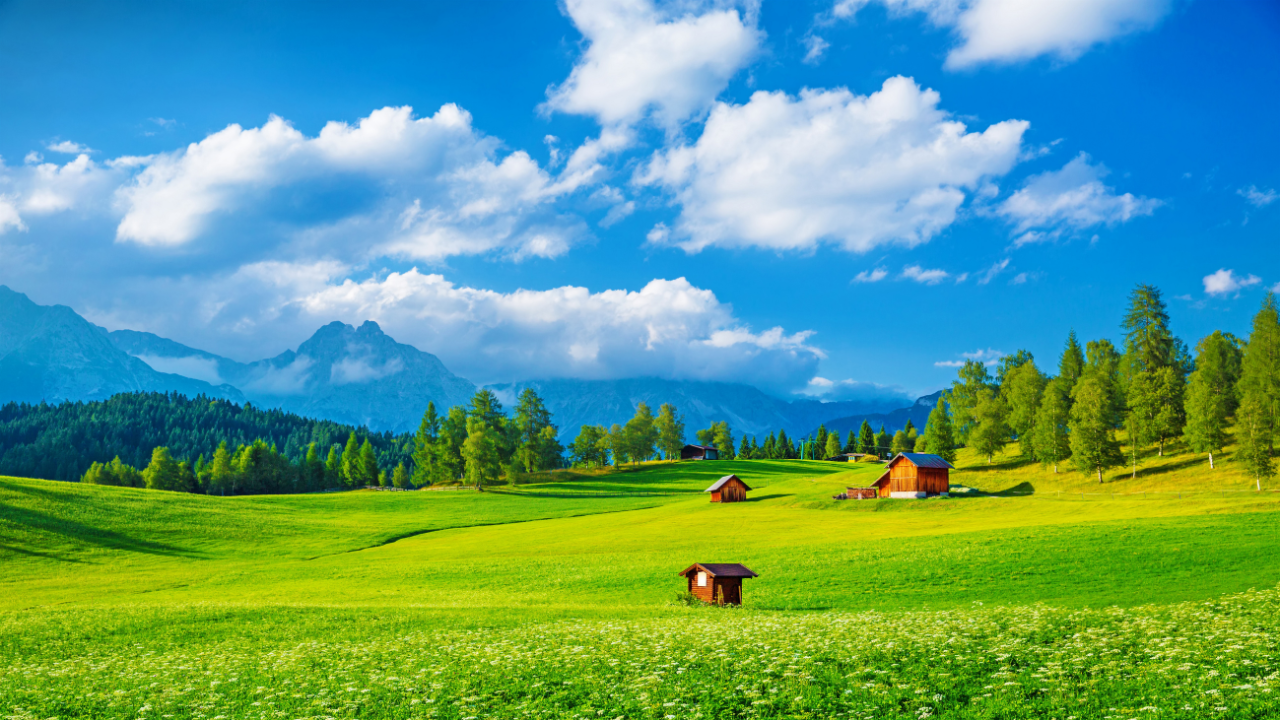
There is a particular kind of exhale that happens when you walk into a room and there is a landscape painting on the wall — a mountain at dusk, a fog-wrapped valley, a stretch of coast where the water meets the sky in that specific shade of blue that photographs never quite get right. Something in the nervous system recognises it before the brain catches up: space, depth, the suggestion of air and distance in a room that might otherwise have none. India is not short of landscapes worth painting. We have the Himalayas and the Ghats, the Thar and the Sundarbans, the backwaters of Kerala and the red laterite cliffs of Goa, the silver rivers of Assam and the volcanic plateaus of Deccan. We also have, increasingly, homes where people want to live surrounded by beauty — and a thriving online market in nature art prints that makes bringing that beauty inside easier and more affordable than at any point in history. This guide covers everything: the styles, the choices, the room-by-room logic, the gifting occasions, and how to buy landscape wall art in India that will still look magnificent in twenty years.
Why Landscape Art Works So Well in Indian Homes
Indian homes are rarely quiet. They tend to be full — of furniture, of colour, of people, of sound, of the ambient activity that comes from living in one of the world's most densely social cultures. This is not a problem. It is, in fact, one of the more charming things about the way India inhabits its domestic spaces. But it does mean that landscape art performs a particular function here that it might not need to perform in, say, a minimalist Stockholm apartment: it creates visual breathing room. A well-chosen landscape print on a busy wall is the visual equivalent of opening a window — it doesn't change anything material about the room, but it changes how the room feels to be inside, which is ultimately what interior design is actually for.
There's also a deep cultural resonance to landscape imagery in the Indian context. Landscapes are not neutral in India — they carry geography, memory, identity, season. A painting of the ghats at dawn means something specific to someone who grew up in Varanasi. A mist-covered tea estate means something to someone from the hills. A desert sunset in ochre and rose is not just beautiful — it's a place, a feeling, a season that belongs to someone. The best landscape art prints for Indian homes understand this, and at Lurevi we've curated a collection that reflects India's own extraordinary visual geography rather than defaulting to the generic European countryside that filled homes in a previous generation.
Understanding the Styles: Landscape Art Is a Wide Country
Like the landscapes themselves, landscape art in print form covers genuinely enormous stylistic territory. Knowing the difference before you buy saves you from the particular disappointment of ordering something you imagined as sweeping and receiving something that is, technically, also a landscape — just not the right one.
Photorealistic Landscape Prints
At one end of the spectrum: prints that look, at a glance, like exceptional photographs. Detailed, high-resolution, colour-accurate depictions of real places rendered with the fidelity of a camera and the compositional intelligence of a trained artist. These work beautifully in homes that want their art to be a window — literally, a view onto a place — rather than an interpretation of one. A photorealistic Himalayan panorama above a sofa in a Delhi apartment is not subtle, but it is not trying to be subtle, and that's fine. Ambition in home décor is underrated. The key quality consideration here is resolution: for a photorealistic print to hold up at large sizes (and landscape prints almost always look better large), the source file must be high enough resolution that individual elements — a distant pine, a wave's edge, a snowfield's texture — remain sharp rather than soft.
Impressionist and Painterly Landscape Prints
Slightly looser, slightly warmer, and significantly more forgiving of imperfection — painterly landscape prints capture a feeling rather than a fact. The light on a paddy field at harvest time, not the paddy field itself. The mood of a monsoon coastline, not its coordinates. These prints are enormously popular in Indian homes because they work with a wider range of interior styles, complement rather than compete with existing colour palettes, and — this matters more than people admit — age better than photorealistic art, which can start to feel like a specific moment in a specific aesthetic rather than an enduring piece. Impressionist and painterly landscapes are the biological equivalent of something with good bone structure: they look good across time and in varied lighting, and they rarely require you to justify them to guests.
Minimalist Landscape Prints
A mountain reduced to three shapes and two colours. A horizon line and a wash of gradient. A single tree against a field of pale gold. Minimalist landscape art is, counterintuitively, among the hardest landscape styles to do well — because when you remove almost everything, what remains has to be absolutely right. When it is, though, these prints have a meditative quality that nothing else quite matches. They suit modern apartments, Japandi-influenced interiors, bedrooms where the goal is calm rather than stimulation, and studies where concentration is the brief. They also have the practical advantage of almost never clashing with anything, which makes them a genuinely safe gifting choice — the only category of art where "safe" is a compliment rather than a concession.
Abstract Landscape Prints
Here the landscape becomes a point of departure rather than a destination. Colour fields that suggest a valley without depicting one. Gestural marks that carry the energy of a coastline without its specifics. Abstract landscape prints occupy fascinating middle ground between the purely representational and the fully abstract — they give viewers enough to anchor themselves (sky here, land there, something like water perhaps) while leaving significant interpretive space. In Indian homes, these tend to work best in living rooms and dining spaces where people actually sit and look at walls long enough to find their own meanings in things — which is, honestly, a reasonably good description of every family gathering everywhere.
Indian Landscape Art: Regional and Cultural
This is where things get genuinely exciting for 2026. There is a growing movement among Indian contemporary artists to document and interpret India's own extraordinary landscape diversity through fine art prints — and the results are some of the most compelling wall art currently available in the country. The Kumaon hills in autumn ochre. The Rann of Kutch under a full moon, all silver and silence. The mangroves of the Sundarbans rendered in deep green and brown. The tea gardens of Munnar in that specific shade of green that doesn't exist anywhere else in the world — the kind of green that arrives in India and introduces itself properly. These prints do something imported landscape art fundamentally cannot: they root your home in a specific, local, deeply felt geography. They say this is where we are from and this is what it looks like and it is extraordinary.
Vintage and Illustrated Map-Style Landscape Art
Antique map aesthetics, illustrated travel-poster style, vintage naturalist prints of Indian geography — these blend the landscape tradition with a heritage aesthetic that suits both contemporary and traditional Indian interiors. A vintage-style illustration of the Nilgiris in the manner of a 19th-century botanical survey. A hand-drawn map-style print of Rajasthan's desert forts. These prints carry a storytelling quality that purely representational landscape art sometimes lacks — they feel curated, considered, and slightly knowing, which is a tone that Indian homes with books on the shelves and opinions about tea tend to appreciate.
Style Comparison: Finding Your Landscape
| Style | Best Room | Interior Fit | Gifting Score | Mood Created |
|---|---|---|---|---|
| Photorealistic | Living room, hallway | Modern, statement, minimal | ★★★★☆ | Awe, expansiveness, clarity |
| Painterly / Impressionist | Living room, dining room | Warm, eclectic, traditional-modern | ★★★★★ | Warmth, nostalgia, beauty |
| Minimalist | Bedroom, study, entryway | Modern, Japandi, minimal | ★★★★★ | Calm, clarity, intention |
| Abstract Landscape | Living room, dining room | Contemporary, eclectic | ★★★★☆ | Contemplative, expressive |
| Indian Regional Landscape | Any room | Any interior | ★★★★★ | Belonging, pride, rootedness |
| Vintage / Illustrated Map | Study, dining room, library | Heritage, eclectic, literary | ★★★★★ | Story, nostalgia, curiosity |
Room-by-Room Guide: Where Landscape Art Does Its Best Work
Landscape prints are among the most versatile categories of wall art — they're genuinely difficult to place badly, which is a genuine compliment in a field where placement mistakes are both common and expensive. That said, some rooms call for landscape art more naturally than others, and understanding why helps you make the best choice for each space.
The Living Room: Where Landscapes Anchor Everything
The living room is the natural home of large-format landscape art, and the logic is simple: this is where people sit and look at walls with enough sustained attention to actually appreciate what's on them. A panoramic landscape print — Himalayan peaks at golden hour, a wide river bending through monsoon green, the geometries of a Rajasthani salt lake at noon — gives the living room a focal point that does more visual work than any other single décor choice. Go wide and go large: a 30×40 inch or larger horizontal landscape print above a sofa creates the effect of an additional window onto an extraordinary place, which is, in a 1,200 sq ft apartment in any Indian metro, essentially priceless. [LINK: "Room-by-room guide to digital art in Indian homes" → /blog/digital-illustration-home-decor-a-room-by-room-guide]
For gallery walls in living rooms, landscape prints from a consistent palette (blues and greens for forest and water scenes; ochres and roses for desert and dawn scapes) create cohesion across mixed sizes and orientations. The key is a unifying tonal logic — the prints don't have to match, but they should agree with each other in the way that good conversation partners do: different views, shared wavelength.
The Bedroom: Landscapes That Calm
In the bedroom, the brief is different. You're not looking for awe — you're looking for peace. Minimalist landscape prints, soft watercolour mountain scenes, misty forest art, gentle coastal watercolours — these are the bedroom's natural landscape vocabulary. A single large print above the bed of a misty Kerala backwater scene or a minimalist Himalayan ridge in pale grey and white creates exactly the kind of visual quietude that makes a bedroom feel like a genuinely restful place rather than just a room with a bed in it. Avoid high-contrast or dramatically colourful landscapes in bedrooms — they tend to energise rather than settle, which is the wrong direction at the wrong time of day.
The Home Office and Study: Landscapes That Inspire
There is solid, if informal, evidence that looking at natural landscape imagery — mountains, forests, open skies — reduces cognitive fatigue and restores directed attention. Whether or not you find the science persuasive, the lived experience is real: a beautiful landscape print in a home office changes the quality of the time spent there. Something about the suggestion of open space and natural scale makes the work feel less claustrophobic and the problems less sealed. A vintage illustrated map of India's hill stations above a desk is not just décor — it's a daily reminder that the world is larger and more interesting than whatever is currently on the screen, which is the kind of perspective that good work requires and bad meetings tend to erode.
The Dining Room: Landscapes That Invite Conversation
Landscape art in dining rooms is underused in India and enormously effective where it's deployed. A large painterly landscape on the dining room's main wall creates a backdrop that makes dinner feel like an occasion rather than just a meal — a distinction that, in Indian homes where food is already elevated to an art form, is warmly received. The specific landscape matters here more than in other rooms: choose something that generates conversation rather than just admiration. An illustrated map of a region your family has roots in. A dramatic painting of a place everyone at the table has an opinion about. Art that gives people something to say, because the dining room is where people say things, and it would be a shame to waste the opportunity.
The Entryway and Hallway: Landscapes as Arrival
The entryway is the first room and the last — the place where the outside world ends and home begins, and where home ends before the outside world resumes. A landscape print here is not decoration; it's a statement about what your home values. A strong, well-chosen landscape in an entryway tells guests something true about the people inside before they've met them, which is a function that most entryways in Indian homes currently leave to a deity figurine and a shoe rack, and while both are doing important work, they could use the company.
Choosing a Landscape Print: The India-Specific Factors
Buying landscape art prints for an Indian home involves a few considerations that generic advice doesn't always account for. Here's what actually matters.
Scale and Proportion in Indian Rooms
Indian apartments, particularly in metros, tend to have walls that are tall relative to their width — high ceilings in older buildings, and standard 9-to-10-foot ceilings in most new construction. Landscape art is typically horizontal in orientation, which means it needs sufficient width to feel proportionate rather than stranded. As a rule: a landscape print's width should be at least 60% of the wall width it's on, and ideally more. For a standard 12-foot living room wall, that means starting at 24 inches wide and working up from there — ideally to 30×40 or 36×24 inches for a single statement piece. Anything smaller risks the landscape equivalent of writing an epic poem in a footnote: technically valid, experientially wrong.
Colour Palette and Indian Light
Natural light in India varies dramatically by region and season, but as a general principle it tends to be warmer and more intense than the light that most European landscape art was designed for. This means prints with cool blue-grey palettes — Nordic forests, Scottish coastlines, Pacific Northwest mist — can look slightly washed out or flat in Indian afternoon light, while prints in warm ochres, deep greens, and earthy reds come alive under the same conditions. This isn't a rule against cool-palette landscapes, but it is an argument for previewing your intended placement wall at the time of day you'll most often be in that room, and choosing a print whose palette responds well to that specific quality of light. It is, admittedly, the kind of advice that sounds like more effort than it is — it takes about four minutes and saves considerably more than four minutes of regret.
Indian Geography as Subject Matter
There is a growing argument — and we find it compelling — that landscape art in Indian homes should, at least some of the time, depict Indian landscapes. Not because foreign landscapes aren't beautiful (they manifestly are), but because there is something qualitatively different about living alongside art that depicts the geography you actually inhabit, grew up in, or feel some claim to. A Goan coastline is not just any coastline. A Ladakhi valley is not just any valley. A Bengal monsoon is not just any storm. If there's a place in India that matters to you or the person you're buying for, finding or commissioning art that depicts it is worth the extra effort — and the emotional resonance it produces in a home is worth far more than its price.
Landscape Art as a Gift: Occasioned and Considered
Landscape art is, perhaps somewhat surprisingly, one of the strongest gifting categories in all of wall art — because it has a personal dimension that purely aesthetic art sometimes lacks. If you know something about the recipient's geography — where they're from, where they've been, where they dream of going — a landscape print can carry that knowledge in a way that feels genuinely seen rather than generically thoughtful. Which is a distinction that matters very much in Indian gifting culture, where the gesture is always understood to carry information about how much attention you've been paying.
Gifting by Occasion
Housewarming (Griha Pravesh): A large landscape print for the main living room wall is one of the most impactful housewarming gifts possible — literally the first significant piece of art in a new home, positioned to be seen every day. Choose something in a palette that will work with most neutral interiors, or ask the recipient about their colour scheme. A painterly sunrise or a soft mountain vista in warm greens and golds is almost always right.
Wedding: A diptych of two complementary landscape prints — dawn and dusk, mountain and sea, forest and meadow — carries a quiet symbolism that wedding gifts benefit from. Two views, one home. The metaphor works on several levels simultaneously, which is the sign of a genuinely well-chosen gift rather than one that's just trying very hard.
Retirement: A landscape of a place the retiree loves, has always wanted to visit, or spent meaningful time in is a deeply personal retirement gift — far more so than another watch or another pen set, which have collectively told enough retired people that they are Done With Time to last several lifetimes. Art says: the good part is just beginning, and here is a beautiful place to look at while you enjoy it.
Diwali and Corporate Gifting: Landscape prints in warm, festive palettes — golden valley scenes, sunset vistas over water, dawn over mountains in rose and amber — work beautifully as Diwali gifts because they celebrate light and beauty without being season-specific. A gift that looks as appropriate in February as it does in October is, from a practical gifting standpoint, a genuine achievement.
What to Look for When Buying Landscape Prints Online in India
The online landscape art market in India has expanded considerably — which means both better choices and more noise to navigate. Here's what actually distinguishes a quality landscape print from a disappointing one.
Resolution: The Non-Negotiable
For landscape prints — which are typically displayed at larger sizes and viewed from a conversational distance rather than up close — source resolution is the single most important quality factor. A print sourced from a low-resolution file will show obvious pixelation, soft edges, and a loss of the fine detail (a distant mountain's texture, a river's reflected light, a treeline's individual branches) that makes landscape art compelling at scale. Look for stores that specify print resolution or DPI, and be appropriately sceptical of large-format landscape prints at unusually low prices — the economics of proper large-format archival printing don't permit it without quality compromises somewhere.
Colour Profile and Calibration
Landscape art is perhaps more sensitive to colour accuracy than any other category, because landscapes have a reference point in reality that abstract art doesn't. If a mountain is the wrong shade of blue, you will know — not necessarily consciously, but in the way your brain quietly registers that something isn't quite right and can't stop mentioning it at the back of your perception. Buy from stores that provide colour-calibrated photography, describe their printing colour profiles, and use archival pigment inks rather than dye-based inks, which shift over time in ways that landscapes make particularly visible.
Paper and Finish Choices for Landscapes
Landscape prints benefit from slightly different paper and finish considerations than other art categories. Matte and lustre finishes — rather than glossy — tend to work best for landscape imagery because they handle highlights in skies and water without creating the kind of glare that makes a painting of sunlight ironically difficult to see in sunlight. For photorealistic landscape prints, a fine-art lustre paper (semi-matte, with a gentle sheen) can enhance depth and tonal range. For painterly or impressionist landscapes, pure matte cotton rag paper reads as most authentically art-like.
2026 Landscape Art Trends in Indian Homes
Indian Geography Having Its Moment
The Northeast — Meghalaya's living root bridges, Sikkim's rhododendron forests, Arunachal's cloud-wrapped valleys — is having a genuine moment in Indian landscape art, as photographers and painters turn their attention to one of the most visually extraordinary regions in the world that Indian home décor has, until recently, almost entirely ignored. These landscapes are distinct, beautiful, and genuinely unknown to many Indians — which makes art depicting them a conversation starter of the highest order.
Night Landscapes and Dark-Sky Imagery
Prints featuring India's landscapes under night skies — the Milky Way over Ladakh's Pangong Lake, the desert of Kutch under stars, the Nilgiri hills in moonlight — are among the fastest-growing trends in Indian landscape art right now. These prints are dramatic without being aggressive, beautiful in low-light settings (which most Indian living rooms become in the evenings), and genuinely unlike anything that's been popular in Indian home décor before. They suit the growing cultural appreciation for astronomy and the outdoors among India's younger urban population — a demographic that has decided, collectively, that the outside world is not just a threat but also occasionally spectacular.
Panoramic and Wide-Ratio Formats
The 2:1 and 3:1 panoramic print format — very wide, modestly tall — is increasingly popular for landscape art in Indian homes, particularly above sofas and dining tables where standard proportions can feel slightly cramped. A panoramic Himalayan ridgeline or a wide river delta in early morning light in a 36×18 inch panoramic format is among the most impactful single pieces of art you can put in an Indian living room. It requires good wall space and confident hanging, but rewards both generously.
Muted, Desaturated Palettes
The hyper-saturated landscape prints of the previous decade — electric greens, neon sunsets, HDR-heavy skies — have given way to something more considered: desaturated, film-like palettes that feel less like a screensaver and more like a painting. Dusty lavender mountains, pale gold savannas, pewter-grey coasts, sage-green forests. These prints integrate more easily into varied interiors and tend to age better than their more aggressive predecessors — a quality that, once you've repainted a room twice and realised the art no longer works, you come to appreciate with great fervency.
Frequently Asked Questions
What size landscape painting print should I buy for my living room in India?
For a standard Indian living room, aim for a landscape print at least 24×36 inches wide as a single statement piece — ideally 30×40 inches or larger if your wall space allows. The print should cover at least 60% of the wall width it occupies. Landscape prints are almost always horizontal in orientation, so they need adequate width to feel proportionate rather than stranded on a tall Indian wall. For gallery arrangements of multiple smaller landscape prints, coordinate them by palette (all warm-toned or all cool-toned) and use matching or complementary frames. Tape newspaper cut to your target print size on the wall before ordering — it takes four minutes and prevents considerable regret.
Which landscape art style works best in a traditional Indian home?
Painterly and impressionist landscape prints — which capture mood and warmth rather than photographic precision — tend to integrate most naturally into traditionally decorated Indian homes where there's already a lot of colour, pattern, and texture in play. Indian regional landscape art (Rajasthani desert scenes, Kerala backwaters, Himalayan hill stations) in warm palettes works particularly well because it shares tonal language with existing Indian décor. Vintage and illustrated map-style landscape prints also suit heritage and eclectic interiors beautifully. Avoid stark minimalist or high-contrast photorealistic prints in rooms with heavy traditional furnishing — they can feel disconnected rather than complementary.
Is landscape wall art a good gift for Indian occasions like housewarmings or Diwali?
Landscape art prints are excellent gifts for Indian occasions, particularly housewarmings where a large statement piece for the living room makes an immediate and lasting impact. For Diwali, choose prints in warm, celebratory palettes — golden sunrise scenes, amber desert landscapes, warm forest glows — that feel festive without being thematically limited to the occasion. For weddings, a landscape diptych (two complementary prints designed to hang together) carries quiet symbolism that suits the occasion. The key to gifting landscape art well is knowing something about the recipient's geography — where they're from or where they love — and choosing accordingly.
What should I look for when buying landscape prints online in India?
For landscape prints specifically, source resolution is the most critical factor — low-resolution source files produce soft, pixelated prints at the large sizes landscape art requires. Look for archival pigment ink printing on acid-free paper at 200 GSM or above, colour-calibrated product photography, and matte or lustre finishes rather than glossy (which creates glare in landscape highlights). Also check the store's return and damage policy — large-format landscape prints are more vulnerable to shipping damage than smaller art, so buying from a store that packages and ships carefully matters. Lurevi provides protective packaging and ships across India .
Can landscape art prints work in a bedroom or is it only for living rooms?
Landscape art works beautifully in bedrooms — it just requires a different register than living room landscape art. Choose calming, low-contrast landscapes for bedrooms: misty mountain scenes, soft watercolour coastlines, minimalist horizon lines, gentle forest prints in muted greens and greys. Avoid high-drama, high-contrast, or very saturated landscapes in bedrooms — they energise rather than settle, which works against a bedroom's core brief. A single medium-to-large landscape print above the bed (centred, with the bottom edge at least 15–20 cm above the headboard) is particularly effective, creating the visual equivalent of looking out a beautiful window — which is exactly the right way to fall asleep.
How do I choose between an Indian landscape and a foreign landscape for my home?
Both are valid choices, and this comes down to what you want your art to do. Indian landscape prints — depicting the Himalayas, the Western Ghats, the Thar Desert, the backwaters of Kerala, the Northeast's forests — carry a cultural and emotional resonance that foreign landscapes cannot, connecting your home to a specific geography and memory. Foreign landscape art — Scandinavian fjords, Japanese cherry-blossom hills, Scottish coast — brings in a more universal or aspirational visual language. Many Indian homes do both: a large Indian landscape in the living room as a statement of belonging, and a more internationally curated selection elsewhere. There is no wrong answer, only the answer that's right for your specific home and what you want it to say about you.
Your Walls Have Been Staring at the Ceiling Long Enough
India is one of the most visually extraordinary countries in the world. Its landscapes — the scale of the Himalayas, the lushness of the Western Ghats, the silence of the Rann at dawn, the particular gold of a North Indian October afternoon — deserve to be on walls, not just in memories and phone camera rolls. A beautiful landscape print does something that no other home décor choice quite manages: it expands a room without enlarging it, brings the outside in without opening a window, and gives every day a view worth returning to.
At Lurevi.in, our landscape and nature art print collection is curated with Indian homes specifically in mind — the scales, the palettes, the subjects, and the gifting occasions that matter here. Every print is produced on archival fine art paper with museum-grade inks, packaged to arrive in perfect condition, and available for free shipping across India.
The view from your wall should be worth having. Let's find it.
Shop Landscape & Nature Prints on Lurevi → Find the Perfect Nature Art Gift →
Free shipping across India on orders above ₹999. Archival quality guaranteed. Delivered carefully, every time.
Explore our related collections: Impressionist Art, Monochrome Art, Japanese Calligraphy, Blue Doors and Sea Breezes