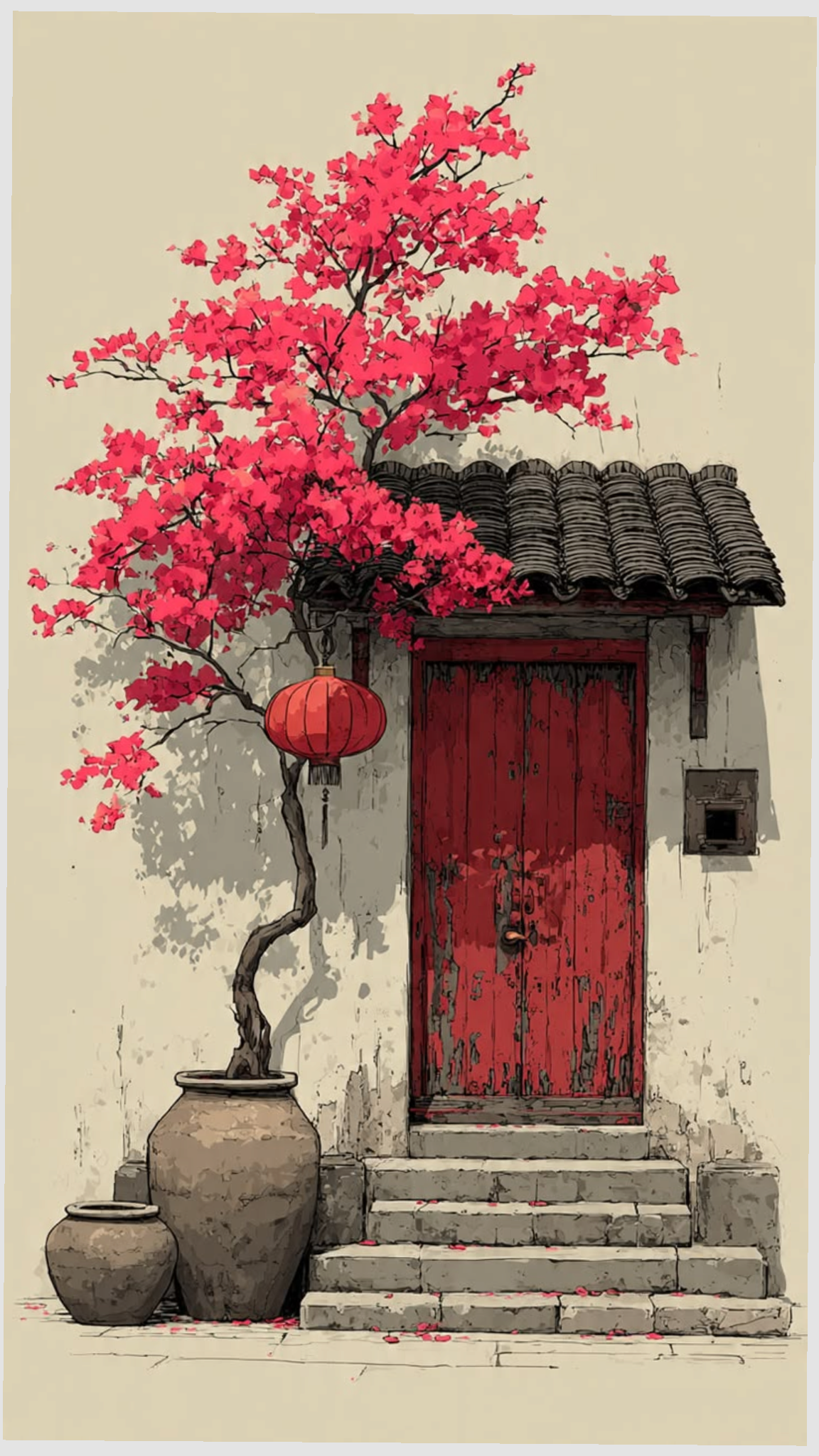
Flower Painting for Wall India: Digital Prints vs Canvas — The Honest Guide for 2026
There is a particular kind of decision paralysis that strikes Indian home décor shoppers somewhere between discovering they want a flower painting for their wall and actually checking out — and it almost always comes down to the same question: digital print or canvas? Both are beautiful. Both are widely available online in India. Both have passionate defenders who will tell you the other option is, if not wrong exactly, then at least not ideal. This guide is not here to end the debate so much as to give you the information to settle it yourself, for your specific home, budget, and intentions — because the correct answer genuinely depends on factors that vary from person to person, and anyone who tells you otherwise is, with the greatest respect, trying to sell you one of the two things.
First: What Are We Actually Comparing?
Before we get into the versus, it helps to be clear about what each option actually is — because both terms get used loosely online in ways that occasionally obscure more than they reveal.
What Is a Digital Art Print?
A digital art print — sometimes called a giclée print, a fine art print, or simply an art print — is a high-resolution image printed onto paper (or occasionally fabric) using archival inkjet technology. The source artwork can be a digitally created illustration, a scanned watercolour, a photograph, or any combination of the above. What matters is the output: ink on a flat, paper-based surface, produced to museum-quality standards when done well.
The words "digital print" cover an enormous range — from a 300 DPI inkjet print on 200 GSM matte cotton rag paper that will outlast your furniture, to a laser-printed poster on flimsy stock that starts developing a personality of its own (not a good one) within eighteen months. The method is the same in name; the quality difference is enormous, which is why buying from a store that's transparent about its materials and process matters more for prints than for almost any other product category.
What Is a Canvas Print?
A canvas print is an image printed directly onto canvas fabric — typically a polyester-cotton blend — and then stretched over a wooden frame (this is called gallery wrapping) or left unstretched for framing. Canvas prints have a texture that paper prints don't, and when done well, they can convincingly mimic the look and feel of an original oil or acrylic painting. Canvas prints are also, as a rule, heavier, bulkier, more expensive to produce, and more complicated to ship than paper prints — facts that have practical implications for Indian buyers that we will get into shortly.
It is worth noting, right here at the start, that "canvas print" has also become a slightly elastic term in Indian online retail. Some sellers use it to describe any large-format print with a canvas-like texture, including prints on synthetic materials that are nowhere near the quality of a proper stretched canvas. As with paper prints, the term doesn't guarantee the quality — which is, again, why sourcing matters as much as format.
The Honest Comparison: Eight Factors That Actually Matter
1. Visual Quality and Appearance
This is where the debate gets genuinely interesting, because the honest answer is: it depends on what you're going for.
A high-quality giclée print on fine art matte paper produces colours that are often more accurate and vibrant than a canvas print of the same image — because paper, being a flat, non-textured surface, allows ink to sit more precisely and render finer details with greater clarity. For botanical illustrations, watercolour florals, and any art that relies on delicate line work or subtle colour gradation, a fine art paper print will typically outperform a canvas print on pure visual fidelity. The detail in a pressed-flower illustration or a Mughal-inspired floral motif lives in precisely the kind of fine lines that canvas texture can soften into a gentle blur.
Canvas, on the other hand, wins on presence. A gallery-wrapped canvas print has a three-dimensional, sculptural quality that a framed paper print can't fully replicate. It sits away from the wall slightly, casting a gentle shadow, and has a visual weight that reads as "painting" rather than "print" from across the room — which is either important to you or it isn't, but it's a real difference. For bold, graphic floral art or large-scale compositions where colour and impact matter more than fine detail, canvas often looks more commanding.
2. Cost: The Number That Changes Everything
Let's be direct about this, because it's the factor that most significantly separates the two options for most Indian buyers.
A quality canvas print of a flower painting in a size suitable for an Indian living room (say, 24×36 inches) from a reputable physical store in India will typically cost you between ₹3,500 and ₹6,200, before framing. This is for the canvas alone — gallery-wrapped, ready to hang. A fine art paper print of equivalent quality and size, ordered from a service like Lurevi, ranges from ₹829 to ₹1,549 depending on size and finish, including shipping.
That's not a small difference. That's a difference that, if you're furnishing or decorating a home where multiple walls need attention, adds up to either one or five-to-seven pieces of art depending on which format you choose. A home with seven thoughtfully chosen floral prints in beautiful frames is, in most cases, a more interesting and visually rich space than a home with one canvas — even a very good canvas. Art is almost always better in quantity than in isolation, which is a point that canvas pricing tends to argue against rather effectively.
3. Framing: The Practical Indian Reality
Here's the thing about canvas prints: they don't need frames. They hang as they are, gallery-wrapped, and that's part of their appeal. But paper prints, once you add a good frame, can look equally commanding — and often more elegant, because a well-chosen frame is itself a design element that a frameless canvas can't offer.
The practical consideration in India is that framing a paper print gives you complete control over the final look in a way that a pre-stretched canvas doesn't. You can choose a thin black metal frame for a modern apartment, a thick dark wood frame for a heritage bungalow, a natural light wood frame for a Scandinavian-inspired room, or a gold-leaf frame for something a little more — well, a little more. Canvas prints, being frameless by design, are committed to one aesthetic that may or may not age well as your interior evolves. [LINK: "How to frame digital art prints at home" → /blog/how-to-frame-digital-art-prints]
4. Longevity and Archival Quality
Canvas prints, when produced with UV-resistant inks on quality canvas, are genuinely durable — resistant to humidity, less prone to tearing, and able to handle the kind of vigorous dusting that Indian homes with open windows occasionally require. A properly produced canvas print can look excellent for 75 years or more.
Fine art paper prints, printed with archival pigment inks on acid-free paper, match this longevity — with the critical caveat that they need to be framed behind glass to protect them from humidity, dust, and the enthusiastic curiosity of children and house cats. Unframed paper prints left exposed in humid conditions will deteriorate. Framed properly, they're as archival as any canvas. The frame is not optional — it's structural. Think of it less as decoration and more as infrastructure, which is a sentence that applies to good framing and also to a surprising number of marriages.
5. Shipping and Delivery in India
This is an underappreciated practical difference that matters more than most buyers realise.
Canvas prints, being rigid, bulky, and fragile at the corners, are significantly more complex and expensive to ship than paper prints. Damage during transit — corner dents, canvas punctures, frame warping from humidity changes — is more common than sellers like to advertise. Paper prints roll or lie flat, ship in tubes or flat mailers with protective layers, and arrive in far better condition far more reliably. If you've ever waited three weeks for a canvas print only to open the package and find a corner that looks like it had a disagreement with the delivery van, you already understand this distinction personally.
6. Customisation and Variety
Digital fine art prints, by the nature of how they're produced, allow for a much wider range of size options, paper types, and finish variants than canvas. Want the same floral painting in three sizes for a gallery wall arrangement? Simple for a print; more complicated and significantly more expensive for canvas. Want a matte finish rather than the semi-gloss that most canvas prints default to? Easy for paper; limited for canvas. The flexibility of the format is genuinely useful for anyone decorating multiple rooms or building a gallery wall arrangement, where variety in size and subtle differences in finish can make the difference between a wall that looks designed and a wall that just looks occupied.
7. Gifting Suitability
For gifting — which, given how much gifting Indians do, is a genuinely important category — fine art paper prints have significant advantages. They're lighter, easier to wrap beautifully, possible to present in elegant packaging without structural risk, and available at price points that make gifting multiple prints (a set of three botanical illustrations, say) feasible in a way that canvas makes impossible.
Canvas has one gifting advantage: it arrives ready to hang, with no framing required. For recipients who are not the type to seek out a framing shop (a category of person that is, in our experience, larger than most art enthusiasts expect), this is worth something. If you know your recipient will find frame-shopping daunting, canvas removes that step — though it also removes their ability to choose a frame that suits their specific room, which can be a meaningful loss.
8. Sustainability
Digital fine art prints on acid-free cotton rag paper, produced to order, have a substantially smaller environmental footprint than pre-stretched canvas prints, which involve a wooden stretcher frame, synthetic canvas fabric, and significantly more material and packaging. For buyers for whom sustainability is a consideration — and in 2026, that's an increasingly large number — the print wins on environmental grounds by a meaningful margin. The trees involved in a canvas stretcher frame would like you to know they had other plans.
The Full Comparison at a Glance
| Factor | Fine Art Digital Print | Canvas Print | Winner |
|---|---|---|---|
| Colour & detail accuracy | Excellent — flat surface allows precise ink placement | Good — texture can soften fine detail | |
| Visual presence / "painting" feel | High with framing; lower unframed | High — textured, dimensional, frameless | 🖼️ Canvas |
| Cost (24×36 inch equivalent) | ₹829–₹1,549 | ₹3,500–₹6,200 | |
| Framing flexibility | Complete — any frame style | Limited — typically frameless | |
| Longevity (quality product) | 75+ years (framed behind glass) | 75+ years (UV-resistant inks) | 🤝 Draw |
| Shipping reliability in India | Excellent — flat or rolled, minimal damage risk | Variable — corners and frame vulnerable | |
| Size / format variety | Extensive — multiple sizes, finishes | More limited per product listing | |
| Ready to hang (no framing needed) | No — requires framing | Yes — gallery-wrapped | 🖼️ Canvas |
| Gifting suitability | Excellent — elegant packaging, lighter, affordable sets | Good — ready-to-hang, but heavy and costly | |
| Sustainability | Lower footprint, less material | Heavier footprint — wood, synthetic canvas |
Which Flower Painting Format Is Right for You? (A Practical Decision Guide)
Rather than a blanket verdict — which would be both dishonest and unhelpful — here's a framework for making the decision based on your specific situation.
Choose a Fine Art Digital Print If…
- You're buying multiple pieces for a gallery wall or multiple rooms
- The artwork features fine detail — botanical illustrations, watercolour florals, intricate line work — where colour and line accuracy matter
- You want the flexibility to choose your own frame and change it as your interior evolves
- You're gifting the piece and want beautiful packaging at a price point that allows for generosity
- You're decorating on a thoughtful budget and want maximum art per rupee
- You care about archival longevity and want something that will last decades with proper framing
- You're ordering online and want reliable, damage-free delivery
Choose a Canvas Print If…
- You want a single bold statement piece and prefer the ready-to-hang convenience
- The artwork is graphic, large-scale, and relies on visual impact rather than fine detail
- You're gifting to someone who you know won't visit a framing shop and needs the piece to be immediately functional
- The textured, painting-like quality is specifically important to you or the recipient
- You have a large, high-ceilinged space where the dimensional quality of a canvas helps it hold its own
A Note on Flower Paintings Specifically
We've been talking about this in general terms, but since flower paintings are the specific subject here, it's worth making one pointed observation: the majority of floral and botanical art — watercolour florals, botanical illustrations, delicate nature studies, pressed-flower compositions — is better served by fine art paper printing than by canvas. This is because floral art, more than almost any other category, depends on the accurate rendering of subtle colour gradations, soft tonal transitions, and fine organic line work. These are precisely the qualities that canvas texture is most likely to compromise, however subtly.
For bold graphic floral art — an oversized hibiscus in flat saturated colour, a monstera in stark black and gold — canvas holds its own. But for the watercolour rose, the pressed botanical specimen, the Mughal-inspired floral miniature, the soft contemporary peony? Paper, without question. The art was made for a flat surface, and a flat surface is where it looks its best.
How to Get the Most Out of Your Flower Art Print: Framing, Placement, and Care
Framing Your Floral Print
A fine art print without a frame is like a saree without the blouse — theoretically complete, but practically inviting trouble and definitely not its best self. The frame does three things for a paper print: it protects it (glass keeps out humidity, dust, and wandering fingers), it presents it (a good frame elevates a print from decoration to art), and it allows it to be changed (you can reframe the same print as your room evolves, which canvas never offers you).
For floral and botanical prints, frame choices broadly fall into three registers: thin black or white metal frames for minimal, modern interiors; natural or stained wood frames for warm, earthy, and eclectic spaces; and gold or brass frames for rooms that want a touch of the ornate — which, in many Indian homes, is not a touch but rather a considered commitment, and good for them. The print itself will tell you which direction to go. Watercolour florals in soft palettes tend to want warm wood. Graphic botanical prints in bold colours want black or white. Vintage illustrations look magnificent in dark wood or antiqued gold.
Placement and Lighting
Floral prints dislike direct sunlight not because they're precious but because even archival inks will fade faster under sustained UV exposure — which in India, where the sun has both opinions and commitment, is a practical concern. Place your prints where they receive good ambient or artificial light rather than direct afternoon sunlight. North-facing walls are ideal in most Indian homes; south-facing walls with afternoon exposure are where prints go to age prematurely and without dignity.
The height rule applies here as it does everywhere: centre of artwork at 145–152 cm from the floor. Above furniture, keep 15–20 cm of clear space between the furniture's top edge and the frame's bottom edge. These are not arbitrary conventions — they're the product of enough galleries and homes getting it wrong often enough that the right answer became obvious.
Caring for Framed Prints
A framed fine art print behind glass requires almost no maintenance. Dust the glass with a dry microfibre cloth. Don't spray glass cleaner directly onto the frame — spray onto the cloth, then wipe. Keep away from sustained direct sunlight and avoid hanging on walls that share a surface with bathrooms or kitchens on the other side, where moisture can migrate through plaster and cause damage the frame won't warn you about until it's too late. That's essentially it. Art is, in this specific respect, substantially easier to maintain than most relationships and virtually all houseplants.
Frequently Asked Questions
Are digital art prints as good as canvas prints for flower paintings?
For most flower paintings — especially watercolour florals, botanical illustrations, and detailed nature studies — fine art digital prints on quality paper are actually superior to canvas in terms of colour accuracy and fine detail. Canvas texture can soften delicate line work and subtle tonal gradations, which are central to what makes most floral art beautiful. Canvas has advantages in visual presence and ready-to-hang convenience, but for the majority of flower painting styles, a high-quality giclée print on matte fine art paper is the better choice for both quality and value.
How much do flower painting prints cost compared to canvas in India?
Fine art digital prints of flower paintings from quality Indian retailers like Lurevi typically cost between ₹829 and ₹1,549 for sizes suitable for Indian living rooms and bedrooms. Comparable canvas prints from physical or online stores in India generally range from ₹3,500 to ₹6,200 for equivalent sizes. The cost difference means you can buy four to seven high-quality fine art prints for the price of one canvas — which, for most homes where multiple walls need attention, is a very meaningful consideration.
Do I need to frame a digital art print of a flower painting?
Yes — and it's worth doing properly. A frame does three essential things for a paper print: it protects it (glass prevents humidity, dust, and UV damage), it presents it (a well-chosen frame elevates a print from poster to artwork), and it gives you long-term flexibility (you can reframe the same print as your room evolves). The cost of good framing in India ranges from ₹400 to ₹1,200 depending on frame style and size, which still keeps the total well below the cost of a canvas. Many frame shops across Indian cities — and increasingly, online framing services — can frame prints to gallery standard within 3–5 days.
How long do fine art flower painting prints last?
High-quality fine art prints using archival pigment inks on acid-free paper are rated to last 75 years or more without significant fading — when framed behind glass and kept away from direct sunlight. This is equivalent to the longevity of a quality canvas print under comparable conditions. The key requirement for paper prints is proper framing behind UV-resistant glass and placement away from direct sustained sunlight, which causes fading in both paper prints and canvas over time, regardless of ink quality.
Which is better for gifting a flower painting — a print or a canvas?
For most gifting situations in India, fine art prints are the stronger choice. They're lighter and easier to package beautifully, available at price points that allow you to gift a curated set of two or three prints rather than a single piece, and ship more reliably without damage risk. Canvas prints have one gifting advantage — they're ready to hang with no framing required — which matters if the recipient is someone who won't visit a frame shop. If you know the recipient, prints give them the freedom to choose their own frame; if you're unsure of their décor sensibility, a canvas in a neutral palette removes the framing variable entirely.
Can I order flower painting prints online in India and get them delivered safely?
Yes — fine art paper prints are significantly more reliable for online delivery in India than canvas prints, because they can be shipped flat in rigid mailers or rolled in protective tubes, both of which are far less vulnerable to transit damage than stretched canvas frames. Lurevi ships all prints in protective packaging designed to arrive in perfect condition across all Indian pincodes, with free shipping on orders above ₹999. Canvas prints, being rigid and corner-sensitive, have a higher damage rate in transit regardless of seller — a practical consideration worth factoring into your decision.
The Verdict — and Where to Shop
If you've read this far, you already know where we come down: for flower paintings in India, the fine art digital print is the better choice for the large majority of buyers, the large majority of the time. Better value, more flexible, more forgiving to ship, better suited to the detail and delicacy of most floral art, and available at prices that make buying well an option for everyone rather than a luxury for a few.
Which is not to say canvas has no place — it does, for the right buyer in the right situation, as outlined above. But the conversation in Indian home décor has been weighted toward canvas for years largely on the basis of it feeling more "substantial," which is a perception that deserves to be updated now that fine art printing technology has genuinely closed the quality gap and decisively opened the price gap.
At Lurevi.in, every flower painting print is produced on archival-quality fine art paper using museum-grade inks, photographed true-to-colour, and shipped in packaging that takes the delivery process as seriously as the printing process. Browse our floral collection, find the flower painting that was always meant for your wall, and let a blank wall become what it was clearly waiting to be — something worth looking at.
Shop Flower Painting Prints on Lurevi → Read: Digital Art vs Traditional Art for Wall Prints →
Free shipping across India . Archival quality. Packaged to arrive perfectly. Every time.
Explore our related collections: Vintage Art, Pop Art, Abstract Art